Supreme Court rules Planned Parenthood cannot sue over South Carolina defunding effort
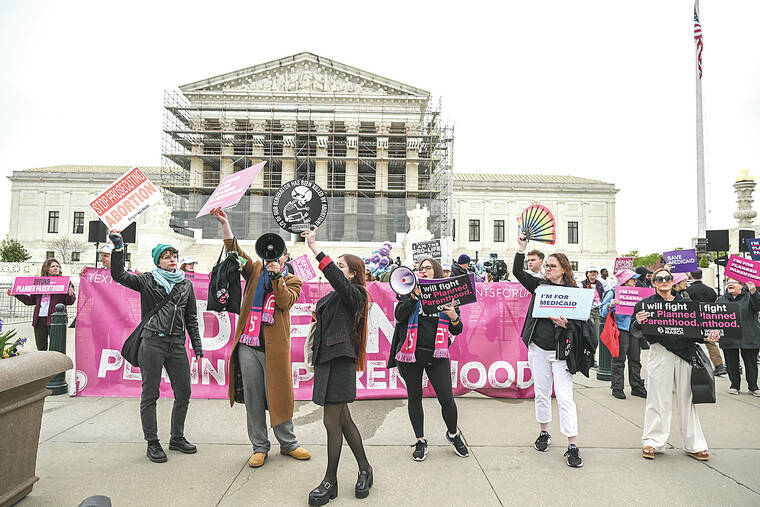
WASHINGTON — The Supreme Court ruled Thursday that Planned Parenthood and one of its patients cannot sue South Carolina over its effort to deny funding to the group, reasoning that the relevant federal statute does not authorize such suits.
The vote was 6-3, with the court’s three liberal members in dissent.
ADVERTISING
In 2018, Gov. Henry McMaster of South Carolina, a Republican, ordered state officials to deny Medicaid funds to Planned Parenthood, saying that “payment of taxpayer funds to abortion clinics, for any purpose, results in the subsidy of abortion and the denial of the right to life.”
But abortion was mentioned only in passing in the decision, and the patient in the case had sought access to contraception, not an abortion.
Instead, the justices focused on whether the plaintiffs were entitled to sue to enforce part of the Medicaid law, which gives federal money to states to provide medical care for poor people.
Still, in shutting down such suits in federal court, the majority made it easier for states to deny funding to Planned Parenthood.
Justice Neil Gorsuch, writing for the majority, said private suits to enforce federal statutes are rarely permissible and require clear congressional authorization.
Gorsuch wrote that there are other ways to enforce the statute. The federal government can cut off Medicaid money, he wrote, and South Carolina has an administrative process in which medical providers can challenge their exclusion from the state’s Medicaid program.
In dissent, Justice Ketanji Brown Jackson, joined by Justices Sonia Sotomayor and Elena Kagan, said the law in question directly authorized the suit. She added that Gorsuch’s proposed alternatives were unrealistic.
Jackson concluded her dissent by predicting that grave consequences would flow from the majority’s approach. “Today’s decision is likely to result in tangible harm to real people,” she wrote.
© 2025 The New York Times Company