
Hawaii retailers, caught in a pinch over pennies, seek bill rounding
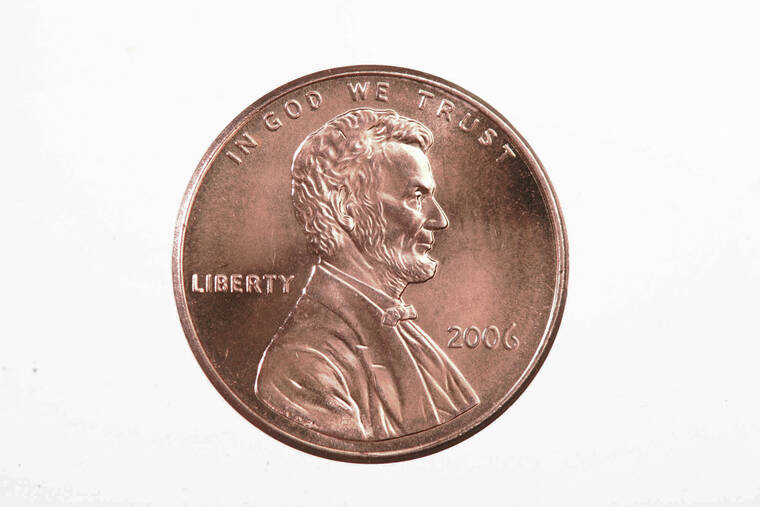
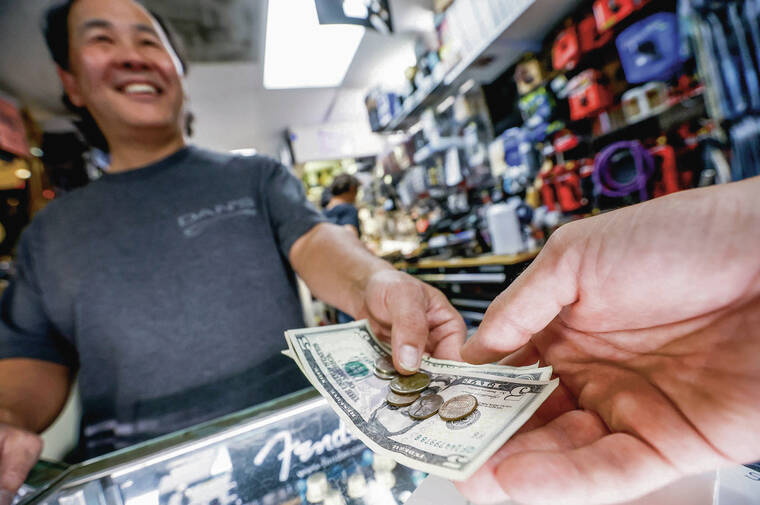


Five months after the federal government stopped minting new pennies, Hawaii lawmakers are working to accelerate phasing out use of the coins throughout the state.
Leaders in the state Legislature earlier this year ignored a bill introduced in the House of Representatives aimed at requiring retail merchants to round customer bills up or down to the nearest increment of a nickel. But after hearing more concerns on behalf of local retailers about the difficulties in obtaining pennies from banks to make change, a Senate committee in March revived the legislation in another bill related to currency via an unusual maneuver that could result in retail bill rounding for cash purchases statewide.
ADVERTISING
“We saw this coming last summer,” said Greg Cabanting, general manager of 19 gas station convenience stores mostly under the Minit Stop brand on Maui and Hawaii Island, referring to a shortage of pennies to give customers as change.
President Donald Trump in February 2025 directed the U.S. Department of the Treasury to stop making new 1-cent coins in large part because it was costing nearly 4 cents to make each one. The department minted its last penny in November after 232 years of production.
First Hawaiian Bank said in a statement that its commercial supply of pennies started to be affected in January, and that after taking steps to manage distribution fairly among business customers, the bank had to discontinue fulfilling merchant orders.
Cabanting said he first was unable to get a resupply of pennies from a local bank in February, and since then availability has been inconsistent.
In response, the convenience store chain put up signs encouraging customers to trade in stockpiles of pennies, but Cabanting said that’s not a long-term solution.
“We knew the problem wasn’t going to get better,” he said in an interview.
Victor Lim, a government relations executive with McDonald’s in Hawaii representing the Hawaii Restaurant Association, told a House committee in March that he informed legislative leaders in December about a potential penny supply shortfall ahead, but that the issue had become an actual problem sooner than he thought.
The trouble facing Hawaii retailers, according to industry representatives, is that state law prohibits rounding up of bills. It also is illegal to charge someone paying cash a lower price than someone using an EBT card for the same items, according to Cabanting.
Lim said businesses are being left to their own interpretation of the law and devising different ways to manage the penny supply situation because they have no clear state government recommendation.
“This is disproportionately hitting the smaller businesses,” he said in written testimony.
To address the issue, 13 members of the House led by Maui Rep. Kyle Yamashita (D, Pukalani-Makawao-Ulupalakua) introduced House Bill 2346 to mandate rounding retail bills up or down to the nearest nickel for cash purchases. But the bill was never scheduled for a hearing and could not be advanced after it failed to make a procedural March 12 deadline to reach the Senate by the midpoint of this year’s legislative session.
In late February during a Senate committee hearing on another bill that aimed to force all Hawaii retailers to accept cash for in-person purchases, the Retail Merchants of Hawaii and Hawaii Food Industry Association trade associations urged that the rounding language from stalled HB 2346 be added to the cash acceptance measure, Senate Bill 3255.
Initially, the Senate Committee on Commerce and Consumer Protection voted Feb. 25 to advance SB 3255 without including the rounding language. But then Sen. Jarrett Keohokalole (D, Kaneohe-Kailua) as committee chair asked the committee’s four other members March 4 to reconsider adding the rounding language to the bill.
“After we made the recommendation on this measure, we had some conversations with members of the small business community,” he told other committee members. “And my recommendation is that we do consider the penny guidance because it’s a much bigger problem than I think we were made aware in the committee, and there are no other (pending bills) discussing this subject matter.”
Keohokalole said doing so would avoid waiting a year to address the issue again at the Legislature or the small business community possibly seeking an emergency order from Gov. Josh Green.
“I’m asking the committee for some latitude to move the bill along so that we can work this out with our partners in the House, because it’s a really confusing situation for business owners and we do want them to keep using cash,” he said.
The committee voted to re-amend the bill, and it subsequently passed the full Senate March 10 on a 25-0 vote.
On March 17, the House Committee on Consumer Protection and Commerce advanced the bill with a further amendment that deleted the original requirement for merchants to accept cash payments for in-person transactions.
Rep. Scot Matayoshi, the committee chair, expressed surprise that retailers have had trouble obtaining pennies from banks so soon and figured it wouldn’t be an issue for a couple more years or so.
“Where are they going?” Matayoshi (D, Kaneohe-Maunawili) asked. “It’s not like they started taking pennies back. I mean it seems like such a drastic situation that happened so quickly.”
The U.S. Mint, part of the Treasury Department, in November estimated there were roughly 300 billion pennies in circulation, which it said was an amount far exceeding what is needed for commerce.
“Retailers and other businesses can continue to price goods and services in one-cent increments,” the Mint announced as part of a ceremony to mark the striking the last new penny.
The Treasury Department said in December that the Federal Reserve will continue to recirculate what it calculated to be far fewer existing pennies — roughly 114 billion — for as long as possible, while noting that widespread use would largely depend on consumer behavior.
Treasury also encouraged the public to spend any pennies in their possession to support a smooth transition that gives retailers and point-of-sale system providers time to adapt.
“As pennies fall out of circulation, merchants will need to round transactions either up or down to the nearest five cents,” the Treasury said in nonbinding guidance in December. “However, most states require sales tax to be calculated on the final sale price rounded to the nearest penny. How states and localities will ultimately amend their sales tax laws is the right and responsibility of those jurisdictions.”
Mana Moriarty, executive director of the Office of Consumer Protection within the state Department of Commerce and Consumer Affairs, expressed some concern about consumers being treated fairly if the bill becomes law.
Moriarty said in written testimony on SB 3255 that a 2023 federal survey found that prices not ending in zero or five were more likely to end in eight or nine, which if rounded up would cost consumers a penny or two more per transaction.
“Overall, prices more often being rounded up could lead to millions of dollars gained by businesses and lost by consumers collectively, amounting to a few pennies lost per person,” Moriarty wrote.
Retailers have pointed out that the ultimate bill for goods depends on a mix of what is bought and the state’s general excise tax, which can add 4.712% to a bill. So an item priced at $5.98 would become $6.26 with GET and then rounded down to $6.25 under SB 3255 on a cash transaction.
Cabanting, the Minit Stop chain manager, isn’t waiting for the potential enactment of a new state law. On April 7, he began testing a reprogrammed point-of-sale system that will round down purchases by cash and EBT cards.
“Basically we’re just going to eat that, which is fine,” he said.
Meanwhile, the House Finance Committee on April 7 advanced SB 3255 with another amendment that would make rounding an option instead of a requirement. The bill was expected to pass the 51-member House on Tuesday, but could still need to be reconciled with the Senate.



Get the Latest News
Most Popular
