Goodwill Hawaii sees rising demand, falling donations as holidays approach
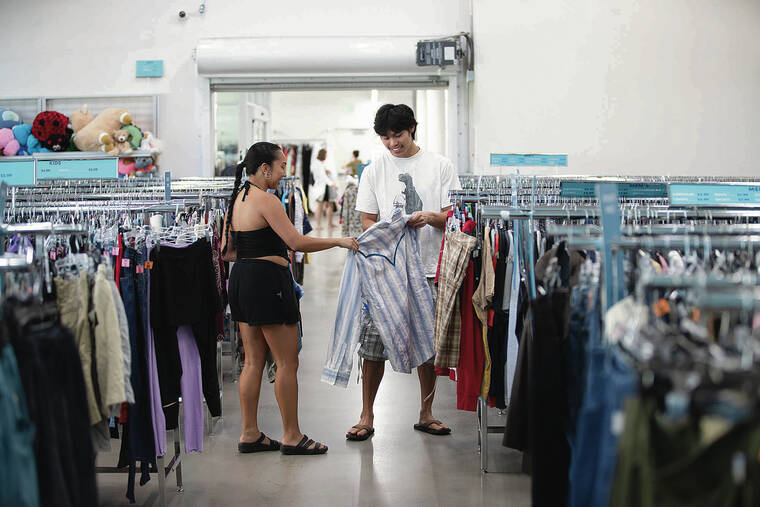
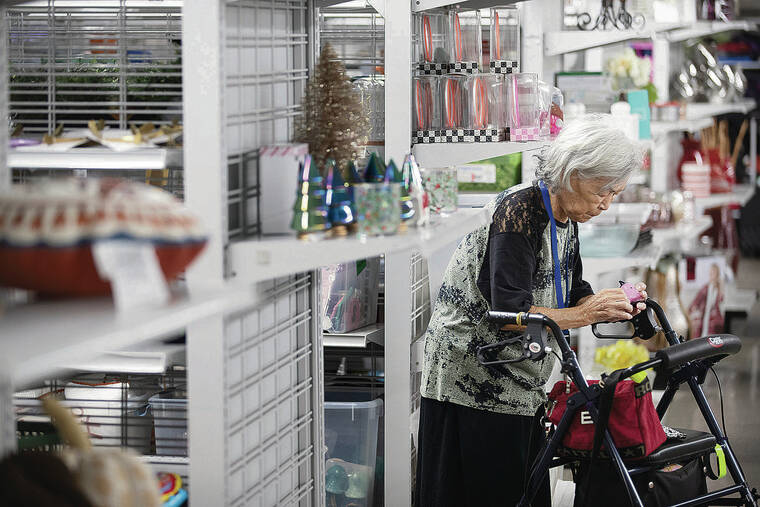

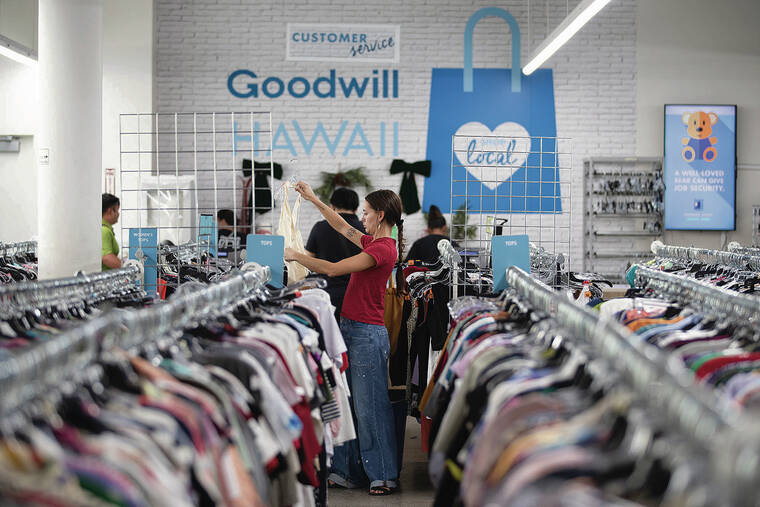

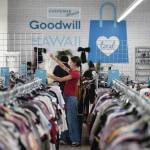
Heading into the year-end giving season, Goodwill Hawaii is experiencing an unusual squeeze: more shoppers than ever relying on its stores for affordable goods, but fewer donations coming in — especially clothing and linens — as households recover from a turbulent fall marked by the federal shutdown, layoffs and rising costs.
“We’ve experienced some decreases, particularly in the clothing and linen side,” CEO Katy Chen said. “We really need more clothing and linens to be donated, and I hope the community can really come out to support all our Goodwill stores statewide.”
ADVERTISING
Chen said that while donations typically dip during tough economic times, the drop-off this year has been sharper, especially on Oahu and Hawaii Island.
“It’s always a difficult thing, because when the need is the greatest, that’s when donations do drop, because people have less to give,” she said. “But the need grows.”
This fall, Goodwill stores statewide have reported double-digit increases in customers, including families seeking lower-cost holiday items. But donations haven’t kept pace. The Kaimuki store, for example, saw an 11.5% increase in customers year-over-year, but donations fell by 10%. In Kaneohe, customers are up 17.5%, while donor count is down 26%.
Across the state, the organization’s outlet store — popular among bulk buyers and resellers — has experienced a 31% jump in customers compared to the same time last year.
“Those are today’s numbers,” Chen said. “For sure, we’re definitely seeing more customers now. We just have to make sure the customers that are coming in for more affordable items have the things that they need to buy.”
Chen said customer traffic on Maui “shot through the roof” after the Aug. 8, 2023, wildfires and has remained elevated. Initially, clothing was the most critical need. Now, as families transition out of temporary hotel housing into more permanent homes, the priority has shifted.
“Now that people have really moved on to something more permanent, we’ve seen a massive interest in furniture,” she said. “People have come walking into our store asking for it.”
Maui also has seen an unusual spike in furniture donations — sometimes entire truckloads — which Chen attributes partly to families relocating due to wildfire displacement.
While furniture donations have risen in some locations, clothing, bed linens, towels and kitchen and bathroom linens have dropped sharply, particularly on Oahu.
“We really would like help from the community to bring that back up again,” Chen said. “Folks really do need to be able to shop our stores and find these affordable items.”
Goodwill’s human services programs also are serving more people. The organization has already assisted more than 1,000 more clients this year than last year across its job training, education and workforce development programs.
“One out of three of our clients statewide are looking for help in finding a job,” Chen said. “Our Hilo campus is serving more than 10% more people than the year before. … That’s up from 25% of our total clients.”
Despite Hawaii’s low unemployment rate, Chen said many residents are juggling multiple jobs or trying to reenter the workforce after hardship. Goodwill has expanded funding for job training so clients can access certifications and educational programs without shouldering the cost.
The organization also received $1 million from the state Legislature this year to offset what Chen said is a projected $1.4 million loss in federal pass-through funding.
“That funding was critical,” she said. “It will definitely help us continue to serve the community going into 2026.”
Goodwill held a “Goods Giving Saturday” drive last weekend at stores on Oahu, Maui and Hawaii island, an event Chen said saw “massive turnout,” especially on Maui. Community partners provided coupons from Zippy’s, McDonald’s and Aloha Gas to thank donors.
But the biggest donation period of the year is just beginning.
“Our biggest donation period runs between Thanksgiving and New Year’s Day, when people are cleaning out their house and are in the giving season,” Chen said.
She hopes residents will keep Goodwill in mind as they declutter and shop in December.
“When you shop or you donate to Goodwill, you really are investing right back into the community,” she said. “You’re helping thousands of people a year with job training, job education, job placement, financial literacy. … These are long-term, sustainable changes in people’s lives.”
Chen said her biggest concern heading into 2026 is whether donations will rebound.
“We depend on the community’s support choosing Goodwill to donate their gently used clothing and household items,” she said. “Seeing the trends that donations are going down, of course, has me concerned, and I hope that next year we can definitely see a turnaround on that.”