Mass layoffs Trump is threatening in shutdown fight may be illegal
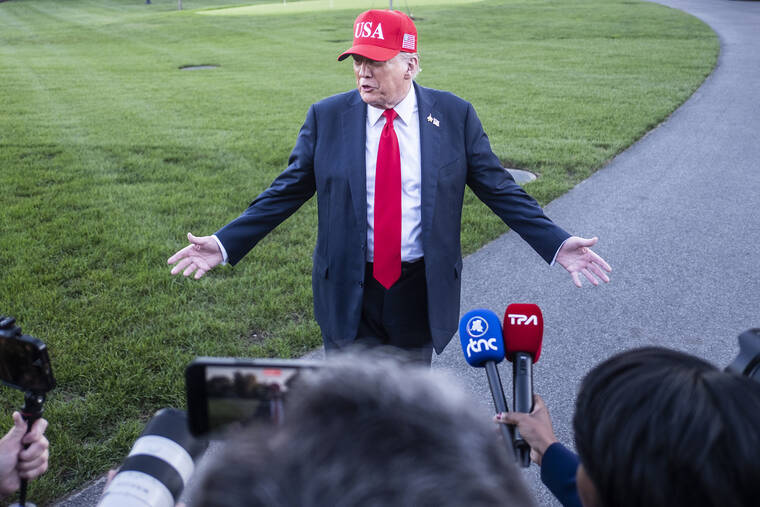
WASHINGTON — Throughout the government shutdown, President Donald Trump and his top aides have repeatedly threatened to conduct another round of mass federal layoffs, insisting at times that they may have to shed workers to keep essential services from closing down.
But the firings now under consideration may be unlawful or unnecessary, according to a wide range of budget experts, legal scholars and union officials. They say that the White House is only looking to exploit the fiscal stalemate to further its political agenda, shrink the government and punish Democrats.
ADVERTISING
At the heart of the matter is a familiar question in Trump’s second term: To what extent may he reconfigure the sprawling federal bureaucracy without a clear directive from Congress?
Trump has already dismissed thousands of civil servants as part of this disruptive reorganization, spurring a wide range of legal challenges from workers who say the president’s actions exceed his authority under law.
Now, Trump has eyed even deeper cuts during the shutdown, a fiscal crisis in which millions of government employees are already on furlough or forced to report for duty without pay. The White House has claimed that the firings would be both necessary and warranted, and that the lapse in funding allows the president to target programs that no longer have money to operate.
“If this keeps going on, it’ll be substantial. And a lot of those jobs will never come back,” Trump said Tuesday, as he appeared to threaten for the first time that those who keep their jobs — but have been furloughed — may not receive back pay.
Unions representing federal workers contend that many of Trump’s threats are illegal. They preemptively sued the administration over its pursuit of mass layoffs last week, arguing that the White House could not legally carry out the dismissals at a moment when the government is only supposed to operate essential services. On Tuesday, the judge in that case told the administration to respond by Friday, and to address “the status of any currently planned or in-progress” firings.
“It’s clearly unlawful,” said Rushab Sanghvi, the general counsel of the American Federation of Government Employees, one of the unions that have sued. Sanghvi said he could not think of any other time when a president had pursued layoffs during a shutdown, or tried to justify deep cuts based on a temporary funding lapse.
Budget experts said that the White House had incorrectly presented layoffs as a fiscal necessity, something no other president in the modern era has done. Not even during the longest federal stoppage on record — a five-week closure in Trump’s first term — did the government shed workers so that it could finance the few operations that are allowed to continue.
“They don’t have to lay them off to do that,” said Douglas Holtz-Eakin, the president of the American Action Forum, a conservative group.
The White House did not respond to multiple requests for comment, nor have officials in recent days explained why they need to cut workers or what programs would be sustained by mass firings.
The looming threats to the federal workforce fit an emerging pattern under Trump, who has sought to use the government shutdown to pressure or punish his political foes.
Democratic lawmakers have repeatedly rejected Republicans’ demands for a short-term spending deal, as they seek an extension of a set of expiring subsidies that help Americans pay for health insurance, which could total $350 billion. That has enraged Trump, who has responded with a series of punitive measures.
Seven days into the closure, the Trump administration has moved to strip billions of dollars from Democratic-led cities and states, while the president has delighted publicly at times in the “unprecedented opportunity” to cut what he has described as “Democrat agencies.”
The White House also signaled this week that it could also try to deny automatic back pay to the hundreds of thousands of federal workers who are currently furloughed. Such a move, communicated in a draft memo, appeared in conflict with a law that Trump had signed in 2019, aiming to spare civil servants from experiencing undue hardships during periods of partisan gridlock.
The White House first telegraphed its pursuit of mass federal layoffs in late September, days before federal funding officially lapsed. In a memo, the White House budget office, which is led by Russell Vought, told agencies to use the closure as an “opportunity to consider reduction in force” notices, a reference to the formal process by which the government lays off its employees.
© 2025 The New York Times Company