
News in brief for June 23 HTH
Taiwan is ‘of course’ a country, president says in rebuke to China
TAIPEI (Reuters) — Taiwan is “of course” a country and China lacks both the historical evidence and legal proof to back up its sovereignty claims, President Lai Ching-te said on Sunday in a strong rebuke to Beijing and its stepped up political and military pressure.
ADVERTISING
China says democratically-governed Taiwan is “sacred” Chinese territory that has belonged to the country since ancient times, and that the island is one of its provinces with no right to be called a state.
Lai and his government strongly reject that view, and have offered talks with China multiple times but have been rejected. China calls Lai a “separatist”.
Giving the first of 10 speeches in a series called “uniting the country”, Lai drew on Taiwan’s history, including the millennia-long connection of its indigenous people to other Austronesians, like native Hawaiians, to show what he said was Taiwan’s separate and distinct development from China.
Taiwan’s people have a record of opposing invasion, like uprisings against Japan’s 1895-1945 colonial rule, and under the last imperial Chinese dynasty, the Qing, Taiwan was only considered a Chinese province for eight years, he added.
“Of course Taiwan is a country,” he said at a speech to a Taiwan branch of Rotary International, pointing also to its presidential elections. “But China says no, that Taiwan is not a sovereign country.”
Lai, who in March called China a “hostile foreign force”, said it was “totally wrong” for Beijing to say that U.N. resolution had anything to do with Taiwan’s sovereignty as it was only about which government was represented at the body.
China’s threat to Taiwan is real, added Lai, pointing to its daily military activities around the island.
Oil hits 5-month high after US attacks key Iranian nuclear sites
SINGAPORE (Reuters) — Oil prices jumped on Monday to their highest since January as the United States’ weekend move to join Israel in attacking Iran’s nuclear facilities stoked supply worries.
Brent crude futures LCOc1 was up $1.92 or 2.49% at $78.93 a barrel as of 0117 GMT. U.S. West Texas Intermediate crude CLc1 advanced $1.89 or 2.56% to $75.73.
Both contracts jumped by more than 3% earlier in the session to $81.40 and $78.40, respectively, touching five-month highs before giving up some gains.
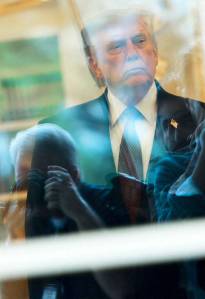
The rise in prices came after U.S. President Donald Trump said he had “obliterated” Iran’s main nuclear sites in strikes over the weekend, joining an Israeli assault in an escalation of conflict in the Middle East as Tehran vowed to defend itself.
Iran is OPEC’s third-largest crude producer.
Market participants expect further price gains amid mounting fears that an Iranian retaliation may include a closure of the Strait of Hormuz, through which roughly a fifth of global crude supply flows.
Iran’s Press TV reported that the Iranian parliament had approved a measure to close the strait. Iran has in the past threatened to close the strait but has never followed through on the move.
“The risks of damage to oil infrastructure … have multiplied,” said Sparta Commodities senior analyst June Goh.
Although there are alternative pipeline routes out of the region, there will still be crude volume that cannot be fully exported out if the Strait of Hormuz becomes inaccessible. Shippers will increasingly stay out of the region, she added.

Get the Latest News
Most Popular
