
South Korea launches its first spy satellite after rival North Korea does the same
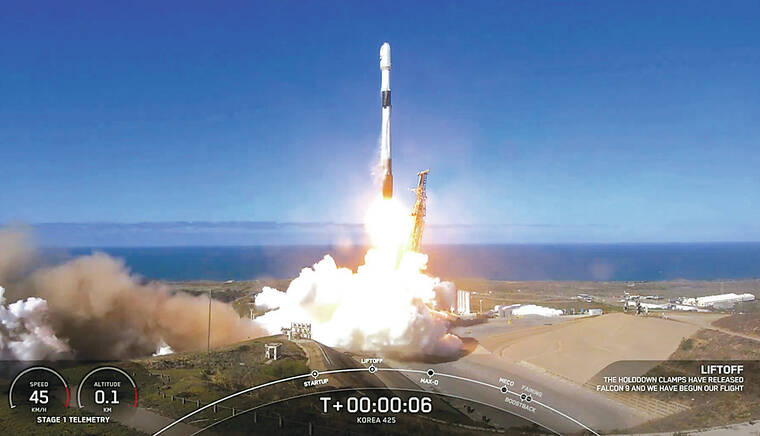
VANDENBERG SPACE FORCE BASE, Calif. (AP) — South Korea on Friday launched its first military spy satellite, a little over a week after North Korea claimed to put its own spy satellite into orbit for the first time as tensions rise between the rivals.
Launched from California’s Vandenberg Space Force Base using SpaceX’s Falcon 9 rocket, it was the first of five spy satellites South Korea plans to send into space by 2025 under a contract with SpaceX. The event had been scheduled for earlier this week but was pushed back because of weather conditions.
ADVERTISING
South Korea has had no military reconnaissance satellites of its own in space and has partially resorted to U.S. spy satellites to monitor moves by North Korea.
When operated together with South Korea’s so-called three-axis system — preemptive strike, missile defense and retaliatory assets — experts say spy satellites will significantly boost the country’s defense against North Korea.
After two launch failures earlier this year, North Korea said it successfully placed its “Malligyong-1” spy satellite into orbit last week. South Korea confirmed that the satellite entered orbit, but officials said they need more time to verify whether it is working properly.
North Korea said Tuesday that leader Kim Jong Un reviewed imagery taken by the Malligyong-1 satellite of the White House and the Pentagon in Washington and U.S. aircraft carriers at a navy base and a shipyard in Virginia. North Korea earlier said the satellite also transmitted photos of U.S. military facilities in Guam and Hawaii and key sites in South Korea.
North Korea hasn’t yet released those photos. Outside experts remain skeptical about whether its satellite can send high-resolution imagery and perform proper military reconnaissance.
The North Korean satellite launch sparked immediate, strong condemnations from the U.S., South Korea and others.
Multiple U.N. Security Council resolutions ban any satellite launches by North Korea, viewing them as covers for testing its long-range missile technology.
North Korea responded angrily, saying it has sovereign rights to launch spy satellites to cope with what it calls increasing U.S. hostilities. It said it would also launch additional ones.



Get the Latest News
