When it comes to the Hollywood strikes, it’s not just the entertainment industry that’s being hurt
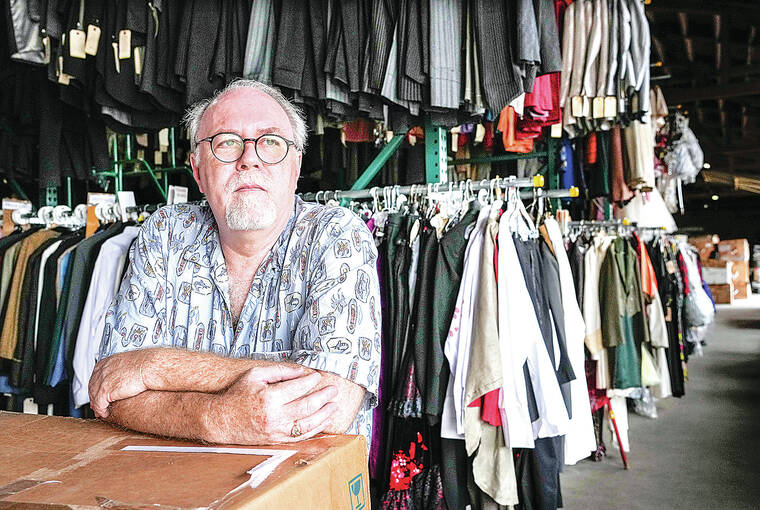
LOS ANGELES — The company had struggled for years, tossed around by pandemic-induced production shutdowns that began in March 2020. Last year, though, business for Valentino’s Costume Group had finally picked back up.
Hoping to capitalize on that good fortune, the shop moved in January to a North Hollywood space twice the size of its old building.
ADVERTISING
Then Hollywood’s screenwriters and actors went on strike. Now, says co-owner Shon LeBlanc, Valentino’s can no longer afford to pay its rent.
“My chest is tightening because the money is so tight,” says LeBlanc, bemoaning the Alliance of Motion Picture and Television Producers’ apparent lack of urgency to try to reach an agreement with the unions. “When is the mayor going to step in and say, ‘I’m ordering you guys to figure something out because you’re about to collapse the economy in Los Angeles?’”
It has been well over 100 days since members of the Writers Guild of America stopped working, and more than a month since the actors union joined them. LeBlanc’s is just one story of many detailing the financial ripple effects.
Few corners of the entertainment industry have been left unscathed
From studio rentals and set construction to dry cleaning for costumes and transportation to sets, it’s hard to find a corner of the Los Angeles economy that has entirely escaped the reverberations.
“A movie set in one day can generate tens of thousands of dollars,” says Kevin Klowden, chief strategist with the Milken Institute, a think tank that researches social and economic issues. “Depending on the level of activity, it can be hundreds of thousands of dollars.”
The last writers strike, more than 15 years ago, took three months to resolve and is conservatively estimated to have cost $2.1 billion in lost output. This time around, the number will be harder to measure given how much production costs, locations and timelines have changed in recent years thanks to technological improvements and increased globalization.
“We tend to think of productions as sort of a self-contained thing,” Klowden says, while in reality, a production often spans companies and even countries. Projects are often “shipped off” to New Zealand for the addition of visual effects, he cites as an example. “The larger a production is, the more likely you are to see a whole bunch of different tax credit mentions at the end.”
Both guilds are seeking to address issues brought about by the dominance of streaming services, which have changed all aspects of production, from how projects are written to when they’re released.
For the writers, the guild has said the use of small staffs, known as “mini rooms” (a riff on the notion of the “writers’ room”), for shorter time periods has made a living income hard to achieve. Actors’ concerns include protections on the use of artificial intelligence.
Although talks between the WGA and the AMPTP have resumed, there are no plans between the actors and studios to return to the bargaining table.
“I’m not really understanding what the silent treatment is,” SAG-AFTRA President Fran Drescher told The Associated Press last week. “It could be a tactical strategy to see if we they can wait us out until we lose our resolve and then they can make a better deal for themselves.”
The fallout reaches beyond entertainment, into all corners of LA
The uncertain duration of the strikes looms large over every business feeling the financial effects, with fallout spreading well beyond the entertainment industry. Restaurants, coffee shops, even nail salons that neighbor major studios — they’re all desperate for a quick resolution.