Dirty money: Ex-lawmaker gets 2 years for cesspool bribes
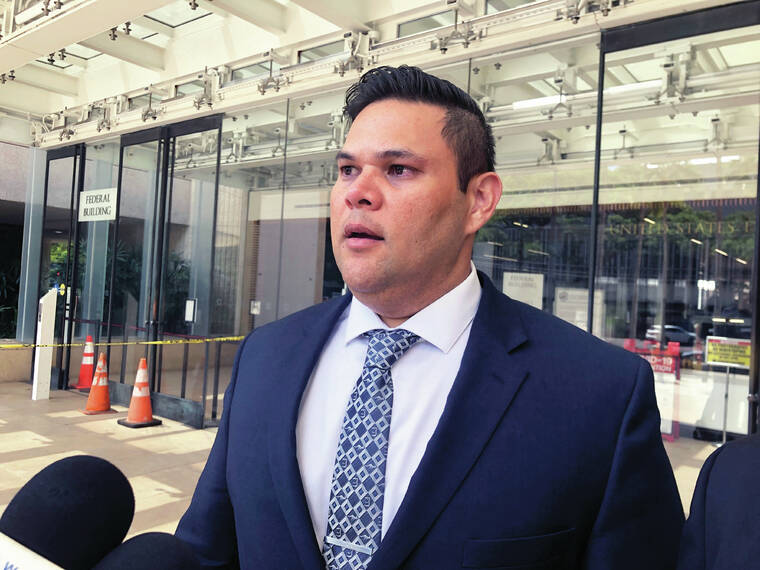
HONOLULU— A former Hawaii lawmaker was sentenced Thursday to two years in prison in a federal corruption case that’s drawn attention to a perennial problem in the islands: the tens of thousands of cesspools that release 50 million gallons of raw sewage into the state’s pristine waters every day.
Cesspools — in-ground pits that collect sewage from houses and buildings not connected to city services for gradual release into the environment — are at the center of the criminal case against former Democratic state Rep. Ty Cullen. He has admitted to taking bribes of cash and gambling chips in exchange for influencing legislation to reduce Hawaii’s widespread use of cesspools.
ADVERTISING
U.S. District Court Judge Susan Oki Mollway said she gave Cullen a sentence at the shortest end of the term recommended by prosecutors because he had cooperated extensively with investigators. Yet she didn’t go as low as the 15 months requested by his defense attorney because of the serious nature of his crimes.
“This was a grievous breach of public trust on your part. It appears to have been motivated by greed, and it stretched out over a number of years,” Mollway told Cullen. “I am very concerned that this was not a momentary lapse of judgement.”
Cullen told the judge he took full responsibility for and was ashamed of his actions.
“I want to say I’m sorry to my family who stayed by me, to my friends, to my constituents, my community and the people of Hawaii,” Cullen said, choking up. “I will continue to work to make my wrongs right. And ensure that this never happens again.”
Mollway also fined Cullen $25,000.
The toxic pits proliferated in Hawaii in the ’50s, ‘60s and ’70s. when investment in sewer lines didn’t keep up with rapid development. Today Hawaii has 83,000 of them — more than any other state — and only banned new cesspools in 2016.
Now Hawaii is eager to get rid of them because of the environmental damage they do and the risk of groundwater contamination.
Public spending on such efforts and the lack of knowledge about the specialized field can create conditions ripe for corruption, said Colin Moore, a political science professor at the University of Hawaii.
“That just creates a lot of opportunities because comparisons are so difficult to make, especially in a really small market like Hawaii where there may only be two, or in some cases even one, contractor who can do the work,” Moore said. “Who’s to say that the bid is inflated?”
Criminal cases related to Cullen’s have led to guilty pleas from the Honolulu businessman who bribed the lawmaker and a former Senate majority leader.
An estimated 16% of Hawaii housing units have cesspools, but the share is much higher on more rural islands like the Big Island, where more than half of the homes have them. They’re found everywhere from the mountains to the seashore and even in urban neighborhoods just miles from downtown Honolulu.
In these homes, effluence from toilets and showers flows through drains into a pit in a yard instead of into a sewer line and to a central wastewater treatment plant. Raw sewage — including all its bacteria and pathogens — then seeps from the pit into the ground, groundwater, aquifers and ocean.
The sewage can contaminate drinking water, and in the ocean it can fuel the growth of reef-smothering algae. As sea levels rise due to climate change, scientists expect the ocean to increasingly inundate cesspools.