Suspect arrested in inquiry into pipe bombs in DC before Jan. 6 riot
Federal agents arrested a Virginia man Thursday on charges that he planted two pipe bombs on Capitol Hill the night before Jan. 6, 2021, a breakthrough that came after years of false leads and rampant conspiracy theories — some promoted by the same FBI leaders who took credit for cracking the case.
The man, Brian Cole Jr., 30, has been charged with transporting explosive materials across state lines and with the attempted destruction of buildings with explosives, according to court papers filed in U.S. District Court in Washington. He was expected to appear there in front of a judge on Friday.
ADVERTISING
The arrest of Cole, taken into custody Thursday morning at the home he shared with his parents in suburban Woodbridge, provided potential closure for an enduring and politically charged mystery: Who planted bombs outside the national headquarters of the Republican and Democratic parties on the eve of congressional certification of Joe Biden’s 2020 victory?
Neither device exploded. But their discovery around 1 p.m. on Jan. 6 added to the fear and confusion on a day when a pro-Trump mob stormed the Capitol, and fueled conspiracy theories among Trump surrogates — the now-deputy FBI director among them — that it was an inside job intended to discredit the right.
At a Justice Department news conference Thursday, Kash Patel, the FBI director, said the break in the case was not based on new information, but came after agents bore down — yet again — on their investigative files and connected dots that eventually led to Cole. Patel and Attorney General Pam Bondi both declined to discuss Cole’s motive.
Patel, offering ritualized political flattery, thanked President Donald Trump, along with federal investigators, for solving what he described as “a case of massive public importance.”
Investigators have not yet been able to determine clear-cut political intent behind Cole’s planting of the bombs, or why he targeted both parties.
But he is speaking with federal agents who hope to learn more about his thinking, according to two people familiar with the matter.
A seven-page FBI affidavit offered a glimpse at the painstaking, jigsaw-puzzle effort that led to Cole’s arrest after nearly five years and dozens of unfulfilled leads.
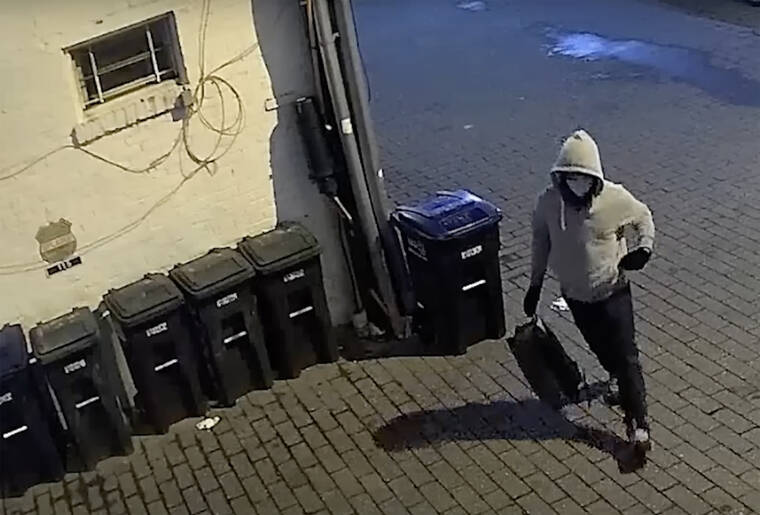
Patel and Bondi did not say what drew investigators to Cole in the first place. But the affidavit noted that agents were able to use his cellphone to track his location on the night the bombs were set, then compare it with surveillance footage of the path the would-be bomber took on the evening on Jan. 5 while cloaked in a mask, dark pants and a gray hooded sweatshirt.
They viewed bank accounts and credit card records to track purchases from local stores, including Home Depot, where he picked up components of the weapons — galvanized piping, nine-volt batteries, electrical wire, steel wool and white kitchen timers.
Darren Cox, the head of the FBI’s Washington field office, which has been handling the inquiry, said at the news conference that the bureau had never deviated from its mission to catch the pipe bomber.
“We do not forget,” Cox said. “We do not give up. And we do not relent.”
While arresting a suspect in the case was a significant achievement for the FBI and the Justice Department under Trump, Bondi used the moment to criticize Biden, falsely claiming that the case had been left to languish under his administration.
© 2025 The New York Times Company