Josh Giddey, Michael Porter Jr. and more underrated NBA offseason moves in 2025


Here’s the thing about the NBA offseason: So many deals happen in such a short burst of time that, inevitably, some of them slip through the cracks. That’s particularly true when a few blockbusters and/or jaw-droppers command the majority of our attention during the league’s brief but dense transaction season in late June and early July.
As a result, we can overlook some impactful deals and underrated signings that may not yield immediate blockbusters but have significant long-term impacts.
ADVERTISING
The emphasis today is on “underrated,” so I’m going to glide right past the obvious stuff that everyone lauded at the time. However, that still leaves some fertile ground to cover. Looking at my list from last year, two key moves — Golden State’s Klay Thompson sign-and-trade and Houston’s pick switcheroo with Brooklyn as a sidebar to the Mikal Bridges trade — both ended up being massive for the 2024-25 season, because they were necessary precursors to the Warriors getting Jimmy Butler and the Rockets getting Kevin Durant.
Let’s take a look at some of my favorite underrated moves from the offseason, and we can look back in a year and see how they aged.
Bulls’ re-signing Giddey
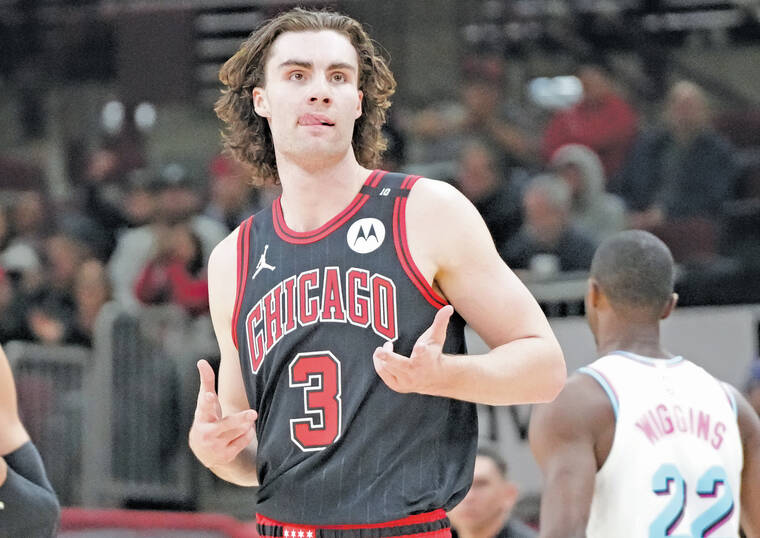
I’m about to upset some people. While I’m generally not a fan of much of what’s happened in Chicago lately, the Bulls’ four-year, $100 million contract with Josh Giddey is completely fine and sets up as a likely long-term win for the Bulls. I’m amazed more people don’t think this. It won’t get a draft pick back for Alex Caruso, but given Chicago’s situation, it was the right move.
While Giddey has some apparent weaknesses that become particularly magnified at the highest playoff levels (not that the Bulls need to worry about that), he’s also 22 years old and coming off his best season as a pro, particularly the second half of it. He even shot 37.8 percent from 3 last season (no, really!). Sure, Giddey wasn’t going to help the Oklahoma City Thunder when they already had Shai Gilgeous-Alexander and Jalen Williams, but people act as if he sucks and he can’t get better from here. Both counts are just dead wrong.
So, no, this isn’t Patrick Williams redux (thank goodness). While it’s true the Bulls had most of the leverage because Giddey was a restricted free agent in a market with no buyers, he also had the strongest résumé of any of the four key RFAs whose situations dragged (Giddey, Golden State’s Jonathan Kuminga, Philadelphia’s Quentin Grimes and Brooklyn’s Cam Thomas).
Spurs’ signing of Kornet
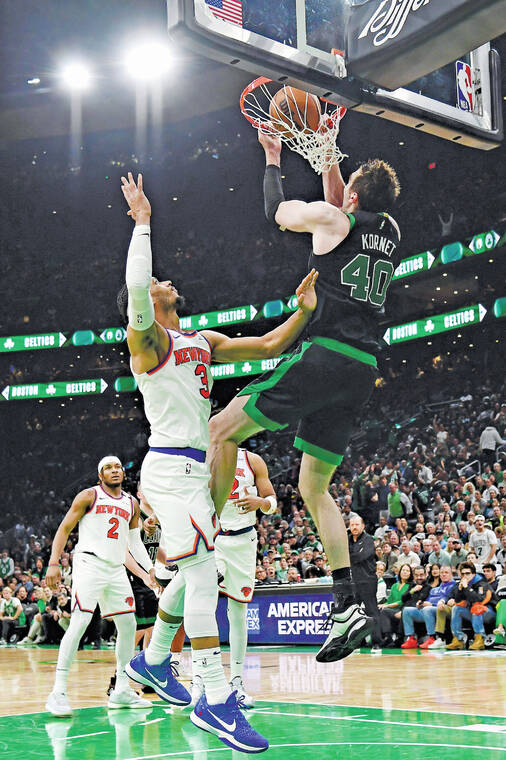
This one kind of flew under the radar because it occurred in the opening flurry of free-agent deals. Still, the Spurs’ landing of Kornet with the bulk of their non-taxpayer midlevel exception (four years, $41 million) was a strong piece of business. On straight valuation, San Antonio didn’t get a huge bargain (BORD$ values Kornet at $12.7 million for this season; he’ll make $11 million), but the details of the contract and the fit in San Antonio both line up strongly in the Spurs’ favor.
For starters, San Antonio wisely targeted a player it knew wouldn’t be retained by his original team (the Boston Celtics were in cost-cutting mode). Kornet also fit the Spurs’ need for a banger to play behind — and occasionally alongside — Victor Wembanyama absolutely perfectly. Process-wise, it’s a 180-degree turn from the Zach Collins Extension Fever Dream.
Kornet isn’t breaking the bank in the present, but the real gem of the deal is all the future flexibility it allows. For starters, the money descends year-to-year over the four-year deal to $9.35 million over the final season in 2028-29. Thus, as the rest of the young Spurs roster likely becomes more expensive, Kornet becomes less so. Second, the final two years are only partially guaranteed at $2.55 million apiece (with the final year also including a team option). Hence, the Spurs’ worst-case scenario beyond this season is an exposure of just $13 million.
Nets’ Porter Jr. trade
This is precisely how you’re supposed to do it when you have more cap space than talent — turn that space into some truly juicy asset, not just a random late first- or second-round pick. Taking on Terance Mann with three years and $47 million left on his deal to get a pick in the 20s when you already had four others? Meh. Getting an unprotected 2032 first-rounder from the Denver Nuggets to turn Cam Johnson into Michael Porter? Beautiful.
That Denver pick will take a while to deliver benefits, but the upside is undeniable. A lot of water can go under the bridge in seven years, but by 2032, Nikola Jokic will be 37. The Nuggets are likely to be at a low ebb after hemorrhaging draft picks to stay competitive in Joker’s prime while avoiding or minimizing their luxury-tax payments.
The expected value on this pick is high, and here’s the other key: It doesn’t require the Nets to wait until 2032. That pick is also a very valuable trade piece if the Nets want to make their own chips-in move at some point between now and then.
Essentially, that draft pick cost them $35 million: the difference in salary between Porter and Johnson, two similarly skilled players who are both signed for the next two seasons. That’s a screaming bargain to obtain an unprotected pick on a team that is likely to be rebuilding. Given that the Nets had to use their cap room on something to meet the league’s salary floor, you can argue that the actual cost was substantially less.
Heat’s Powell trade
How exactly did the Heat pull this off? Miami turned Kyle Anderson and Kevin Love into a starting-caliber player in Powell, one who played at a near All-Star level a year ago with the LA Clippers, and it didn’t even need to give up a draft pick to do it.
Sure, the deal added $7 million in salary and, in a roundabout way, forced a salary dump trade that I’m much less fond of. However, stick with the big picture: The swap turned a bench player (Anderson) and an end-of-bench player (the current version of Love) into a dynamic scoring threat for last year’s 21st-ranked offense.
Powell’s salary of $20.5 million underpays him for his current production level, even if he’s a lock to miss some time with injuries; his 60-65 games will be a massive upgrade on what Miami got from Terry Rozier and Alec Burks a year ago.
That his deal is expiring could be a feature, not a bug, depending on whether Miami becomes aggressive in the February trade market. However, Powell is also eligible for an extension. Regardless of whether he’s a keeper or a rental, Miami won big.