A Honolulu judge has ruled that a court challenge to the state House of Representatives’ closed-door meetings of the House Advisory Committee on Rules and Procedures can proceed.
First Circuit Judge Shirley Kawamura on Monday granted in part and denied in part the House’s amended motion to dismiss the complaint by an ad hoc group including former state senator Laura Acasio of Hilo.
The group, in a Jan. 30 civil lawsuit, argued that closed-door meetings prior to the opening of this year’s legislative session violates Article 3, Section 12, of the Hawaii Constitution, which states, “Every meeting of a committee in either house or of a committee comprised of a member or members from both houses held for the purpose of making decision(s) on matters referred to the committee shall be open to the public.”
The suit alleges “the Rules Committee convened in one or more meetings not open to the public” prior to or on Jan. 16. That’s the date House Resolution No. 6 was introduced to the House, proposing to adopt the rules proposed by the Rules Committee. It was adopted via floor vote on Jan. 17.
Noting the House “alleges that Rules Committee meetings were organizational and thus exempt from the open meeting requirements” of the state Constitution, Kawamura ruled: “Viewing the complaint in a light most favorable to plaintiffs, it does not appear beyond doubt that the alleged meetings were organizational and thus exempt from the Article 3, Section 12, Open Meeting Clause.”
The ruling, which denies the House’s claims that the meetings are exempt from the constitutional open meeting provision, paves the way for the issue to move forward to trial, which is scheduled for June 2026.
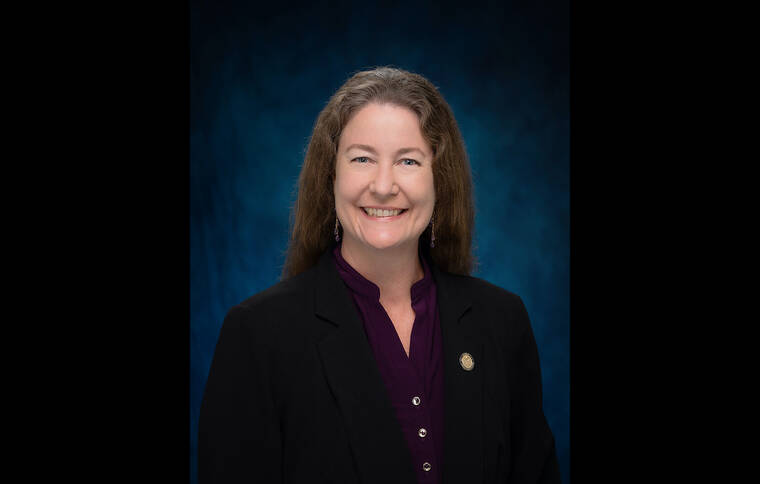
“We’re definitely grateful for the ruling,” said Acasio, who filed the suit as a private citizen two days before assuming a position in the administration of Hawaii County Mayor Kimo Alameda as administrator of the Office of Sustainability, Climate, Equity and Resilience.
“That denial to me indicates that there is a real case, and that the judge — and I can’t speak for the judge beyond what is written — would see merit in our claims,” Acasio said.
The other plaintiffs in the case are: Tanya Aynessazian, Douglas L. Cobeen, Karen K. Cobeen, Michaela Ilikeamoana Ikeuchi and Robert Hale Pahia — all Hawaii County residents; Ka‘apuniali‘ionalaniki‘eki‘e Kanaloa Aiwohi of Maui; and Sergio Josephus Alcubilla III of Honolulu.
Each plaintiff is described in the suit as “a registered voter” who “would have attended the House committee meeting if it had been open to the public.”
“This ruling reinforces that government must serve the people, not shield itself from them,” said Lance Collins, the plaintiffs’ attorney. “The court recognized that the public’s right to know what decisions are being made is not optional — it is fundamental to democracy in Hawaii.”
The House’s motion argued that the plaintiffs’ complaint “fails to state a claim under (Hawaii Revised Statutes) Chapter 92 because the open meeting requirements contained therein do not apply to the Legislature.”
The Legislature exempted itself from the first part of HRS 92, the open meetings law also known as the “Sunshine Law.”
“Although HRS 92-10 makes it clear that the House Rules ‘take precedence’ over the Sunshine Law, it does not ‘appear beyond doubt’ that HRS Chapter 92 is inapplicable to the present facts as alleged,” Kawamura wrote.
“There are multiple factors, and we do know that the Legislature did exempt themselves from the Sunshine Law when they created the Sunshine Law for all other legislative bodies and boards and commissions,” Acasio said. “And while this particular claim is slightly different, it’s in the same vein of government transparency, inclusion of the public in the process — and our goal is to just shepherd along this particular issue with regards to government transparency.”
The House was granted a dismissal on another point — the plaintiffs’ claims that the House has a “custom and practice” of making decisions on bills during recesses of meetings otherwise open to the public, allegedly violating Article 3, Section 12, of the state Constitution.
Kawamura ruled that in viewing the claim “in the light most favorable to plaintiffs” it “fails to sufficiently allege factual circumstances, beyond a general ‘custom and practice,’” and doesn’t “create an actual controversy ‘of sufficient immediacy and reality to warrant a declaratory judgment.’”
The Tribune-Herald reached out to House Speaker Nadine Nakamura but didn’t receive a reply in time for this story. Nakamura told the Tribune-Herald in February that the House “is confident that its rules and committee processes comply with the Hawaii Constitution.”
Email John Burnett at jburnett@hawaiitribune-herald.com.