Trump faults Petro, lists Colombia as rogue drug nation
Colombia’s dollar bonds dropped after the U.S. “decertified” the nation as a partner in the war on drugs amid the biggest cocaine boom in history.
The move by the Donald Trump administration is likely to hit foreign investment, multilateral funding and tourism, as a long-time ally of Washington now finds itself in the same rogue category as Venezuela, Bolivia, Afghanistan and Myanmar.
ADVERTISING
Colombian dollar bonds dropped across the curve and were among the worst performers in emerging markets on Tuesday. Notes due in 2053 lost more than half a cent, the most since early August, to trade below 113 cents on the dollar, according to indicative pricing data compiled by Bloomberg. The peso was little changed in early trading.
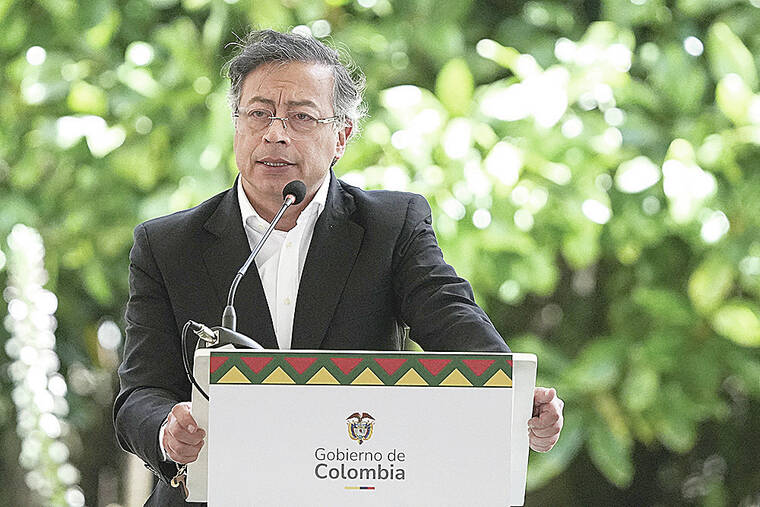
“The U.S. is decertifying us after dozens of deaths of police, soldiers, common people, trying to prevent cocaine from getting to them,” Colombian President Gustavo Petro said Monday evening during a televised Cabinet meeting.
Colombia has been among the biggest recipients of U.S. aid this century, receiving about $14 billion, including military assistance to battle drug cartels and Marxist insurgents. However, relations between Trump and Colombia’s leftist president quickly soured, with the two leaders having very different approaches to the war on drugs, migration and relations with Venezuela.
Trump, in a presidential determination, laid blame for the move with Petro, faulting Colombia’s government for not stopping the production increases, as well as Petro’s “failed attempts to seek accommodations with narco-terrorist groups.”
“The failure of Colombia to meet its drug control obligations over the past year rests solely with its political leadership,” Trump said.
The White House stopped short of requiring that U.S. aid be halted, including in the determination a waiver stating that U.S. assistance remains a vital national interest.
“Given the strategic value of the bilateral relationship and the possibility of change in the upcoming elections, the U.S. would avoid an escalation of tensions with Colombia in the current juncture,” said Alejandro Arreaza, an economist at Barclays. This is why the market reaction so far seems contained, he said.
However, the decision could potentially slash tourism revenue by as much as $1 billion annually if the U.S. were to intensify its travel warnings for Colombia, according to a study by the Colombian-American Chamber of Commerce published in August.
It could also lead to reduced bilateral cooperation, a fall of as much as 60% in access to credit from multilateral lenders, and might spook foreign investors, the study found.
Despite this, the damage is limited by the fact that U.S. aid is no longer as significant for the country as it was at the start of the century, according to Adam Isacson, who studies U.S.-Colombia policy at the Washington Office on Latin America.