Big Island students produce first-ever draft genome of endangered palila
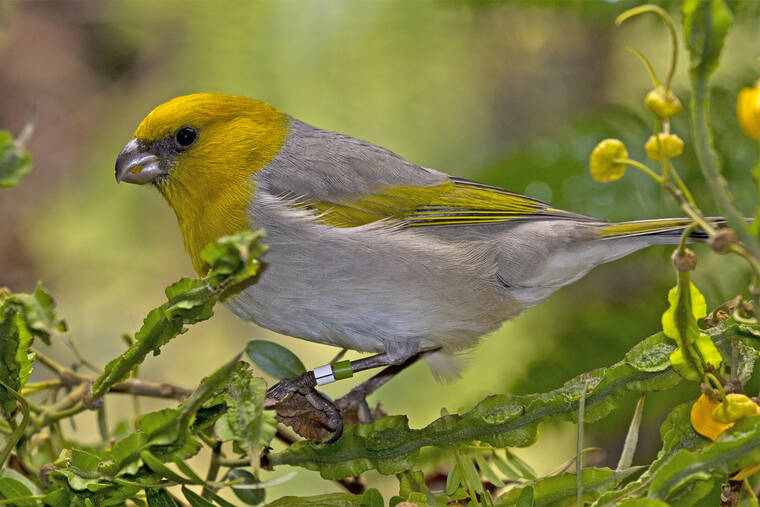
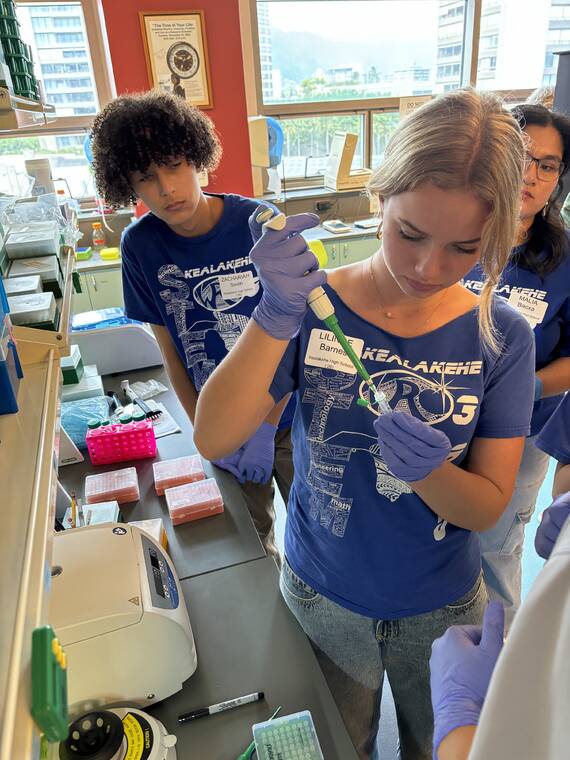
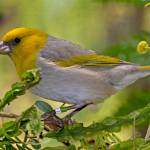
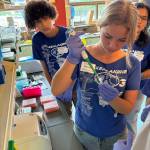
Five Big Island high school students were among the six youths who have successfully produced the first-ever draft genome sequence of the critically endangered endemic palila bird.
Four students and three mentors from Kealakehe High School and one student with one mentor from Hawaii Preparatory Academy joined four mentors and one student from Honolulu’s ‘Iolani School and three representatives from the San Diego Zoo Wildlife Alliance’s Conservation Genetics Division on this student-led research project, which resulted in a notable contribution to Hawaiian conservation efforts, according to a press release from the ‘Iolani School.
ADVERTISING
“Projects like this demonstrate the power of collaboration in engaging students in impactful, real-world scientific research that connects who (the students) are to where they live,” said Johanna Anton, a fellow in the ‘Aina Informatics Network and a chemistry and capstone instructor at Hawaii Preparatory Academy, who served as a mentor on the project.
The genome the students created provides scientists with insights into the palila’s genetic diversity, evolutionary history and vulnerabilities, enabling more precise conservation strategies such as habitat restoration, disease management and potential future breeding programs, according to the press release.
The once-widespread palila is a finch-billed Hawaiian Honeycreeper that has been so impacted by habitat destruction, invasive species and avian malaria that it now only resides in a small region on the slopes of Maunakea. According to the U.S. Fish and Wildlife Service, Hawaii’s endemic forest birds face an immediate extinction crisis.
“It’s such a big opportunity. It’s such a big eye opener for students like us, to be able to access all this technology and then being able to actually do something more for palila, as well as other honeycreepers and our home,” said Kealakehe High School senior and student researcher Malia Bacxa.
Using DNA extracted from cells cryopreserved in the San Diego Zoo Wildlife Alliance’s Frozen Zoo – a unique biobank of genetic materials from endangered species – the students conducted DNA sequencing in their classrooms. Alongside faculty mentors, they learned advanced laboratory techniques including micropipetting, gel electrophoresis and nanopore sequencing, according to the press release.
The students and mentors collaborated through ‘Iolani School’s ‘Aina Informatics Network to produce the draft genome, which Director of Community Science at ‘Iolani School Dr. Yvonne Chan said gives students “place-based research experiences” while teaching them “cutting-edge genomic techniques” and how “they can produce meaningful data and engage with our communities in ways that contribute directly to efforts to understand and protect our endangered wildlife.”
Their work formed the basis of four independent research projects, which were presented at both the Junior Science and Humanities Symposium and the District and State Science Fairs.
In parallel, students are consulting with the U.S. Patent and Trademark Office and indigenous rights experts to develop equitable and culturally respectful guidelines for data sharing and use of the genome, the release said.
“It’s amazing that kids from three different schools could come together to do this kind of work alongside scientists with so much experience. This project, and the future nene project, is an incredible opportunity to be introduced to STEM through a Native Hawaiian lens, “said Kimo Uyehara, a senior at Hawaii Preparatory Academy whose research on palila DNA sequencing was the foundation of his year-end capstone project. “We get to use this advanced technology to protect endangered species — and by extension, our culture.
“This project helped me shape an understanding of my Hawaiian culture by getting involved in something where I could ground myself in ‘aina and take care of the land that has nourished me.”