
MLK’s dream for America is one of the stars of the 60th anniversary of the 1963 March on Washington
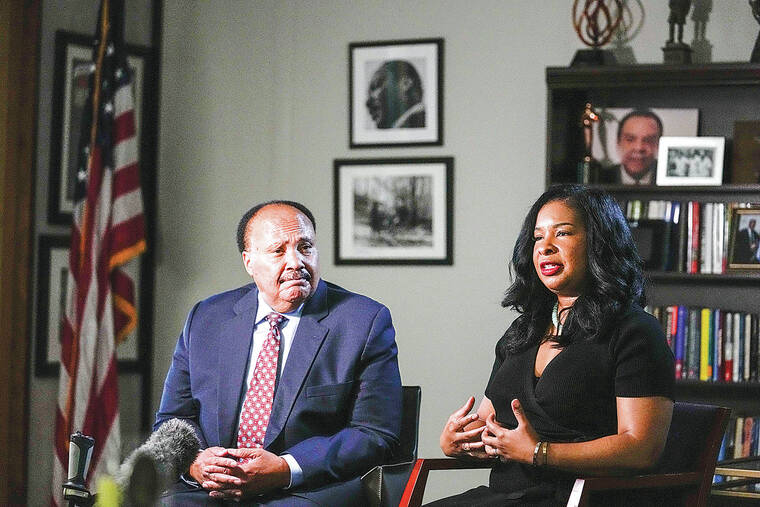
WASHINGTON — The last part of the speech took less time to deliver than it takes to boil an egg, but “I Have A Dream” is one of American history’s most famous orations and most inspiring.
On Aug. 28, 1963, from the Lincoln Memorial in Washington, Martin Luther King Jr. began by speaking of poverty, segregation and discrimination and how the United States had reneged on its promise of equality for Black Americans. If anyone remembers that dystopian beginning, they don’t talk about it.
ADVERTISING
What is etched into people’s memory is the pastoral flourish that marked the last five minutes and presented a soaring vision of what the nation might be and the freedom that equality for all could bring.
As participants prepare to celebrate the 60th anniversary of the March on Washington for Jobs and Freedom, that five-minute piece of King’s 16-minute address is the star of that day and today it is the measuring stick of the country’s progress.
Did King deliver the speech off the cuff?
The first two-thirds were from written text. The actual speech he used is on loan now at the National Museum of African American History and Culture in Washington, in the “Defending Freedom, Defining Freedom” gallery of the museum, and shows where he broke script.
King lieutenant Andrew Young said in an interview that he worked with King preparing the text and “none of the things that we remember were in his speech. They didn’t give him but nine minutes and he was trying to write a nine-minute speech.”
A King biographer, Jonathan Eig, said King hit the end of his written remarks and kept going because “he was Martin Luther King” and “it was time to do what he loved to do best, and that’s to give a sermon.”
Had King talked about a dream before?
Although he set the text aside, his deviation was not extemporaneous in the truest since of the word.
Eight months before the March on Washington, King gave an address in Rocky Mount, North Carolina, with similar themes, including a dream.
In June 1963, King spoke in Detroit and opened with the same recognition of Abraham Lincoln and the Emancipation Proclamation before noting that 100 years later, Black people in the U.S. were not free. He talked of the circumstances and sense of urgency but then moved into what he said was a “dream deeply rooted in the American dream.”
The speech mirrored points he would speak of two months later.
Although King used the theme on several occasions “he always made it sound fresh. That’s kind of how he operated,” said Keith Miller, an Arizona State professor who has studied and written extensively about King’s speeches and addresses.
How important was the march?
The diversity and size of the crowd and energy were major drivers for the Civil Rights Act of 1964 and the Voting Rights Act of 1965, as well as the fair housing law, Norton said. “It would have been very hard for Congress to ignore 250,000 people coming from all over the country, from every member’s district.”
Aaron Bryant, curator of photography, visual culture and contemporary history at the National Museum of African American History and Culture, said the impact was immediate in some ways.
“After the March on Washington, you had some of the organizers, some of the leaders of the march actually meeting with (President) John Kennedy to talk more strategically about legislation. So it wasn’t just a dream. It was about a plan and then putting that plan into action,” Bryant said.


