
Israel launches new attacks in Lebanon, days ahead of rare direct talks
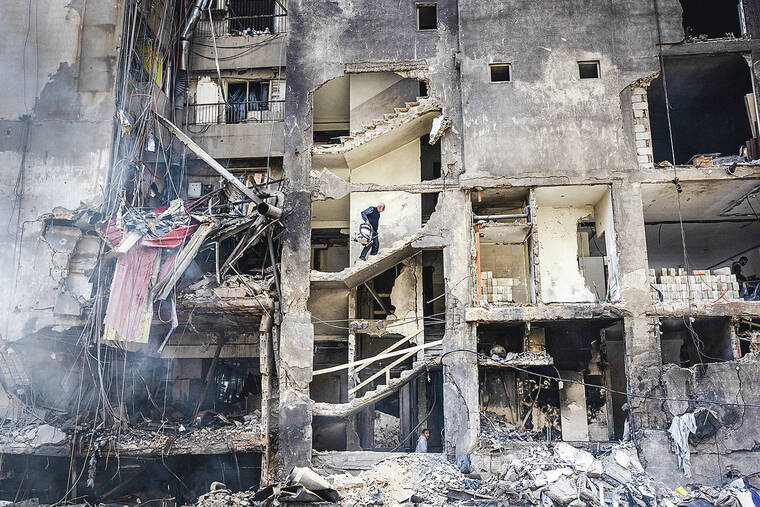
JERUSALEM — Israel launched new attacks on Lebanon on Sunday after the United States and Iran failed to reach a quick peace deal over the weekend.
Last week, President Donald Trump asked Israel to scale back its attacks on Lebanon. The fighting in recent days, which Israel says is targeting the Iran-backed militant group Hezbollah, appears to be focused on southern Lebanon; Israel has not bombed the capital, Beirut, since an onslaught on Wednesday.
ADVERTISING
Israeli and Lebanese officials plan to meet for rare talks in Washington this week.
On Sunday, two Israeli attacks on towns in southern Lebanon killed at least 11 people, according to Lebanon’s official news agency.
Also on Sunday, the Israeli military said its ground forces had carried out a raid on what it described as a Hezbollah infrastructure site in southern Lebanon and that they had killed an armed militant in close combat.
Local media in Israel and Lebanon reported fighting between Israel and Hezbollah in and around the southern Lebanese town of Bint Jbeil. The military said that, in recent days, its ground forces had killed more than 20 Hezbollah militants who had been operating out of a hospital compound in the town.
The Lebanese Health Ministry denied Israel’s claims about the hospital in Bint Jbeil, saying that Israel had attacked civilians and medical crews.
Hezbollah issued a series of statements Sunday saying that it had attacked Israeli military targets in Bint Jbeil and nearby villages, and that it had fired rockets, artillery and drones into northern Israel over the weekend.
The Israeli military said that it had struck a rocket launcher in southern Lebanon overnight that was poised to fire toward Israel.
Israel’s ongoing invasion of Lebanon has been a source of tension in the ceasefire with Iran. Iran had demanded that the truce extend to Lebanon as well. But Israel and the United States said it was not part of their agreement.
Hours after the ceasefire was announced, Israel bombarded Beirut and other parts of Lebanon on Wednesday. That wave of Israeli strikes killed more than 300 people, according to Lebanese authorities. It was the deadliest day of fighting since Hezbollah joined the fray in early March by firing rockets at Israel in solidarity with Iran. Israeli officials said that about 200 of those killed in Lebanon on Wednesday belonged to Hezbollah, without providing any evidence.
One person familiar with Israeli policy decisions said Sunday that Israel’s campaign was focused on southern Lebanon, and it was holding back from targeting Beirut and the city’s outskirts. The Israeli military declined to comment.
Prime Minister Benjamin Netanyahu said Saturday night that Israel was “still active” on the Lebanese front.
“We are fighting Hezbollah and we are determined, I am determined, to return security to the residents” of northern Israel, he said.
On Sunday, Netanyahu visited the strip of southern Lebanon now occupied by Israeli forces together with his defense minister, Israel Katz; the military chief of staff, Lt. Gen. Eyal Zamir; and other military officials.
“There is more to do,” Netanyahu said after the visit.
He added that the preparatory talks expected between Israel and Lebanon would focus on the disarmament of Hezbollah and efforts to reach a lasting peace between the two countries. The Israeli and Lebanese ambassadors to the United States are expected to meet in Washington on Tuesday.
Differences have already emerged over the scope of that meeting.
The office of President Joseph Aoun of Lebanon said Friday that the parties agreed to discuss a ceasefire announcement and the setting of a date for the start of negotiations between Lebanon and Israel under U.S. auspices.
Israel’s ambassador to the United States, Yechiel Leiter, said Israel had “agreed to begin formal peace negotiations this coming Tuesday,” but that it “refused to discuss a ceasefire” with Hezbollah.
The Israeli authorities appear to be bracing for the possibility of more fighting and Hezbollah fire in the lead-up to the meeting planned for Tuesday. Restrictions limiting public gatherings were tightened in the northern border areas of Israel and a decision to reopen schools there on Sunday was reversed.
This article originally appeared in The New York Times.
© 2026 The New York Times Company

Get the Latest News
Most Popular
