
Senate halts effort to restore dedicated tourism funding






After years of legislative skepticism and repeated restructuring, the Hawai‘i Tourism Authority appeared poised this session for a partial restoration of its dedicated funding — until the effort stalled in the state Senate.
House Bill 1950, introduced by Rep. Adrian Tam (D, Waikiki), chair of the House Committee on Tourism, would have directed a portion of the state’s transient accommodations tax back to tourism marketing and destination management.
ADVERTISING
Its passage through the House and one Senate committee after the crossover deadline for bills marked the furthest any proposal to restore HTA funding has advanced since lawmakers eliminated the agency’s Tourism Special Fund in 2022 amid concerns over governance and accountability.
Supporters argued the bill reflected a reset in the relationship between HTA and the Legislature following successive reforms. Lawmakers removed the agency’s procurement exemption in 2021, dismantled its Tourism Special Fund in 2022, placed it under the administrative supervision of the Department of Business, Economic Development and Tourism in 2024, and in 2025 passed Act 132 — formerly Senate Bill 1571 — downgrading HTA’s board to an advisory role while shifting authority to the governor and DBEDT.
“They are in a different place with the Legislature now,” Tam said. “HTA is slowly restoring trust with the public. With a new advisory board and more structure under DBEDT, there are more guardrails.”
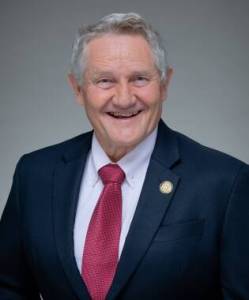
The measure also cleared the Senate Committee on Economic Development and Tourism, chaired by Sen. Lynn DeCoite (D, East Maui-Upcountry-Molokai- Lanai-Kahoolawe), but stalled when Senate Ways and Means Chair Sen. Donovan Dela Cruz (D, Mililani-Wahiawa-Whitmore Village) declined to schedule a hearing.
Dela Cruz said HTA already receives recurring support through the general fund, preserving legislative oversight while allowing flexibility during emergencies such as COVID-19, wildfires, floods and volcanic activity. Dedicated funding, he said, is more appropriate for fee-supported agencies than those funded by broad-based taxes such as the TAT, which flows into the general fund.
He also said lawmakers are still evaluating HTA’s direction and performance. The authority is currently led by an acting — not permanent — CEO, guided by a volunteer advisory board and still navigating governance changes from last year’s reforms.
“It doesn’t seem like the evolution of HTA is over,” Dela Cruz said. “I’m not sure where we are going to end with this.”
Dela Cruz also questioned whether HTA is sufficiently focused on attracting higher-spending visitors, whom he described as more resilient during economic downturns, more likely to buy local products and less likely to strain state resources.
Given tourism’s scale, he said the industry also should do more to support workforce development, expand local leadership opportunities and help grow other economic sectors.
Despite the setback, visitor industry advocates said the bill’s progress signaled a shift.
HB 1950 moved further than similar proposals in recent years, according to Kekoa McClellan, a representative for the American Hotel and Lodging Association who worked with the Hawai‘i Hotel Alliance to organize Tourism Day at the state Capitol Friday.
“The fact that HB 1950 was introduced and made it through the House and made it into Ways and Means in its first session — as far as bills go, that’s fairly successful,” McClellan said Friday from the fourth floor of the Capitol, where the visitor industry was holding an expo. “Most good bills take two to five years to come to fruition.”
McClellan said the 2026 session was also the first time in at least five years that state lawmakers had openly contemplated increasing the state’s tourism marketing budget, a discussion he said remains ongoing.
“Is HB 1950 dead? Yes, but the concept is alive,” he said, noting funding could still be addressed in the broader finance bill.
Jeff Wagoner, president and CEO of Outrigger Hospitality Group, said the bill resonated and is likely to gain traction next year.
“If we are not marketing, others will out‑market us,” he said. “Our international properties haven’t seen the decline we’ve seen here.”
HTA was created in 1998 and long received a share of TAT revenue, allowing its budget to rise and fall with visitor activity. That model ended in 2012, and the agency lost its Tourism Special Fund in 2022.
Today, HTA relies entirely on general fund appropriations. It received $63 million for fiscal year 2026 and is seeking $66 million for 2027, including funding for sports tourism.
As introduced, HB 1950 proposed allocating 15% of TAT revenue to HTA, later removed to allow negotiations. The agency has recommended a 10% to 12% allocation, which would bring funding closer to historic levels.
At 10%, funding would total roughly $81 million annually, approaching the agency’s 2018 peak.
Interim HTA President and CEO Caroline Anderson said the bill would have provided stability critical to long-range planning.
“A dedicated source of funding would help us better plan, because every year we don’t know what we are going to get,” Anderson said.
She added that it would support multiyear agreements, clarify for visitors how their taxes are reinvested in Hawaii and help recruit and retain staff after years of turnover. The agency is currently rebuilding, with a permanent CEO search underway, a chief brand officer position posted and additional hiring in progress.
Tam said restoring TAT funding is also about maintaining Hawaii’s competitiveness as global tourism intensifies.
“We’re competing with places like Bali and other tropical destinations,” he said. “Dedicated funds help keep us competitive.”
DeCoite argued that restoring HTA’s special funding should be viewed as an investment, not an expense, citing tourism’s outsized role in the economy. Tourism generates more than $21.7 billion annually and supports more than 220,000 jobs, she said.
“At some point we need to understand it’s our No. 1 economic driver,” DeCoite said, adding that consistent funding is necessary for long-term planning and returns on investment.
She noted that emerging sectors such as sports and film tourism are often undercounted, even though tournaments drive family spending across multiple sectors, and film and television productions provide global exposure that functions as long-term advertising.
Tam and DeCoite said anti‑tourism sentiment at the Capitol has softened in contrast to recent sessions when bills to dismantle or replace HTA advanced deep into the process. Those measures resurfaced this year but stalled.
House Bills 1944 and 1947, both of which would have repealed HTA, were deferred. HB 1944 proposed replacing the authority with a nonprofit Corporation for the Stewardship of Hawaii Tourism, while HB 1947 would have reassigned its functions across state departments.
Other governance-focused measures also failed to gain traction. House Bill 2403 and Senate Bill 3267, which would have reduced HTA’s advisory board and revised appointments, were never heard. House Bill 2447 was not heard and its counterpart Senate Bill 2906, stalled.
Both bills would have stripped HTA of destination management duties and refocused it solely on marketing while adding a tourism liaison officer in the Governor’s Office.
Tam himself deferred HB 1944, which he introduced following a third-party governance study commissioned by HTA that recommended replacing the agency.
“The bill does need a lot of work,” Tam said at the hearing. “But this is a conversation we need to keep having as we look at what the future of HTA should be.”
DBEDT Director James Kunane Tokioka testified against HB 1944, arguing that Act 132 had already placed HTA on the right path. “The intent was to right the ship at HTA,” he said, “and I think the passage of (SB 1571) has done a lot to achieve that.”
DeCoite said the shift to an advisory board at HTA has reduced conflict and improved collaboration, citing strong coordination among the advisory board, staff and industry partners, especially during recent storms and disruptions.


Get the Latest News
Most Popular
