Inside Patriots-Seahawks Super Bowl matchup: What to watch when Seattle has the ball
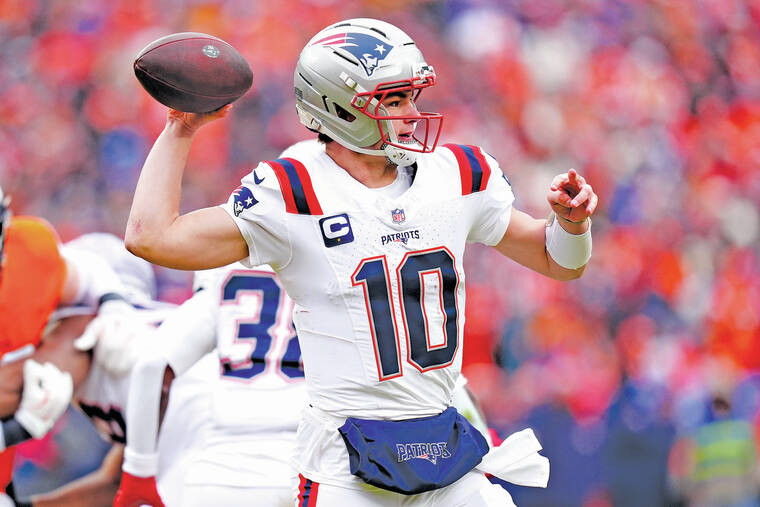
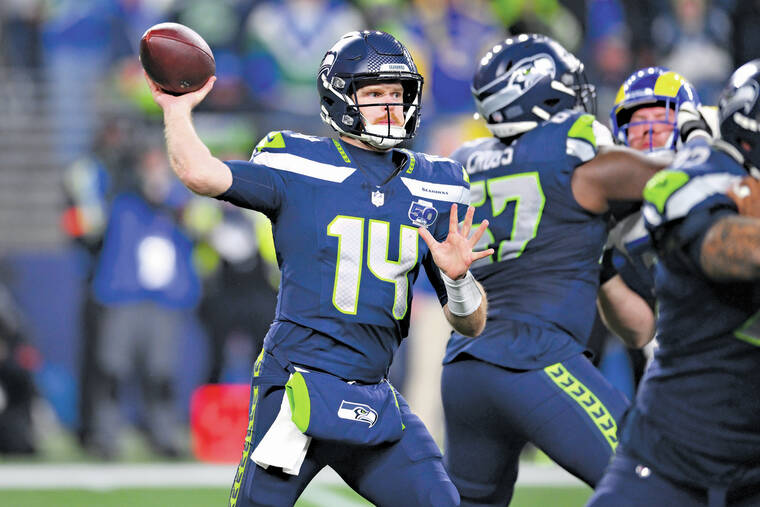

Quarterback Sam Darnold answered the questions about whether he can perform in a big game with the best performance of his life in the Seattle Seahawks’ NFC Championship Game win. He saw the game so clearly, knew exactly what the Los Angeles Rams defense was doing and punished them from the start of the game to the end.
He’ll play in an even bigger game in Super Bowl 60 on Sunday against a New England Patriots defense that has transformed itself schematically in the playoffs. The results have been tremendous. The Patriots have allowed 0.72 points per drive (elite) and 33.5 total defensive EPA per snap (beyond elite) in the postseason, thanks to a slew of takeaways and defensive touchdowns.
ADVERTISING
They went from a below-average unit — partly because of injuries — to an elite unit statistically. However, they played against two awful offensive lines and a backup quarterback in Denver with two games in snowstorms. We’ll find out how much of this improvement is real against a very good Seahawks offense that finished the season 10th in offensive DVOA, 10th in points per drive (2.34) and eighth in explosive play rate (12.1 percent). They hit a lull after Week 11, but got back to being explosive and efficient thanks to a run game that improved late in the season.
As underdogs and mismatched on paper, the Patriots must take chances against the Seahawks, but they’re used to it by now. They’ve been taking chances all postseason, increasing their blitz rate from 16.5 percent in the regular season to 28 percent in the postseason. It’s not just five-man blitzes either; they’ve doubled their cover 0 blitz (man-to-man with no deep safety) rate from 3.8 percent to 7.9 percent. Coach Mike Vrabel and defensive coordinator Zak Kuhr are confident in their corner trio of Christian Gonzalez, Carlton Davis and Marcus Jones to play coverage without much help.
Darnold hasn’t faced many cover 0 blitzes in the regular season or postseason (just 14 snaps), but he’s been boom or bust against it. He averages 10.4 yards per attempt and has thrown four touchdowns, but two interceptions against cover 0. The issue with heavily blitzing Darnold is the Seahawks run a lot of max-protection play actions, and if they can pick up a heavy blitz with their max protection and Darnold has time on these plays, he can punish the defense deep. If the Seahawks are in a passing-down situation, then blitzing becomes more of an issue.
Week 16, 9:48 remaining in the fourth quarter, third-and-6
Here, the Rams defense crowded the line of scrimmage and called a basic cover 0 blitz, in which the secondary plays man coverage across the board but with two droppers from the line of scrimmage to help on in-breaking routes.
This is a pretty standard blitz scheme, and Darnold should know to be aware of the underneath droppers, but he stared down Jaxon Smith-Njigba on an in-route.
The ball was easily picked off. The Patriots have called this type of zero blitz extensively throughout the playoffs, so the Seahawks will need to have a good plan against it rather than just trying to hit in-breakers.
Staying on schedule is everything for the Seahawks. It allows them to stay in heavy personnel and create explosives in the passing game and run the ball at a high rate. Defensive tackle Milton Williams makes a huge impact for the Patriots defense. They are an elite run defense with him in the lineup; without him, they are a bottom-tier run defense. From Weeks 1-10 and Week 18 (Williams was hurt in Weeks 11-17), the Patriots ranked 7th in defensive rushing success rate (63.6 percent), but from Weeks 11-17, they ranked 31st in defensive success rate. More importantly, they’re very good against heavy personnel, which the Seahawks specialize in. Not including the stretch during which Williams was hurt, the Patriots ranked 11th in defensive success rate against heavy personnel.
Their numbers remain similar when they are defending the run from nickel (five defensive backs on the field) against heavy personnel groupings. The Seahawks have lived off creating explosives against base personnel (four or fewer defensive backs on the field). The Patriots don’t match heavy personnel with base often. They ranked 25th in the rate of base against heavy personnel in the regular season.
The Seahawks won’t have the easy button for creating mismatches against base in this game. They’ll have to continue to run the ball effectively against the Patriots’ base personnel, but it won’t be easy against a defense that is elite at taking away what an offense wants to do. The Patriots rank third in success rate against zone runs.
The Seahawks’ interior will have its hands full with Williams and defensive tackle Christian Barmore inside. The Patriots’ interior is the biggest threat to the Seahawks offense and could wreck this game. Right guard Anthony Bradford has struggled on film and will be completely mismatched with either Williams or Barmore, which makes it even more important for the Seahawks that this doesn’t become a drop-back passing game.
In the secondary, Gonzalez doesn’t move from the left side much — 69 percent of his snaps are on the defensive left — but will he travel with Smith-Njigba, who takes up a large share of the Seahawks’ targets? The Patriots could also go with one of their Belichickian strategies and put their second corner, Davis, on Smith-Njigba and double him, and have Gonzalez play one-on-one with the Seahawks WR2 Rashid Shaheed. Shaheed hasn’t been targeted often, but he has big-play ability, and he doesn’t need a high volume of targets to affect the game.
On the first drive of the game in the NFC Championship Game, Darnold identified a one-on-one opportunity and hit Shaheed on a 51-yard completion. He should get 2-3 deep shots if the Patriots do play him with Davis.
AFC Championship Game, 11:49 remaining in the first quarter, first-and-10
On this play, the Patriots tried to use a late disguise, showing a one-deep safety look all the way until the ball was snapped.
After the ball was snapped, they dropped into a cover 4 defense, but the Broncos had the perfect play called against it.
Receiver Marvin Mims had a post. The safety to his side was looking to help on a crosser, so Gonzalez had to play Mims one-on-one. Mims won, and quarterback Jarrett Stidham hit him for a huge play that led to a touchdown.
The Patriots have been susceptible against tight ends, giving up 97 receptions to them in the regular season. A.J. Barner has routinely answered the call when his number is called and should get his fair share of targets against the Patriots’ linebackers. Elijah Arroyo could finally be back for this game after hurting his knee in Week 14. He’s an explosive athlete who could punish the Patriots’ man coverage, particularly in the high red zone.
Though Darnold played his best game of the season against the Rams, this should be a low-scoring game with both defenses having natural advantages. Darnold has to avoid making the big mistake, which is a concern with him after throwing 14 interceptions in the regular season. However, this may be a game in which they run the ball at a high rate and not have to put the ball in Darnold’s hands early. Using play action early and often and targeting tight ends should be a priority. When they do catch the Patriots gambling, they have to capitalize with big plays. The Patriots will bring the heat, so an excellent blitz plan and making adjustments to that plan will be the crux of the game.
This article originally appeared in The Athletic.