With Trump’s tariffs on the line, Supreme Court plans rulings for Friday
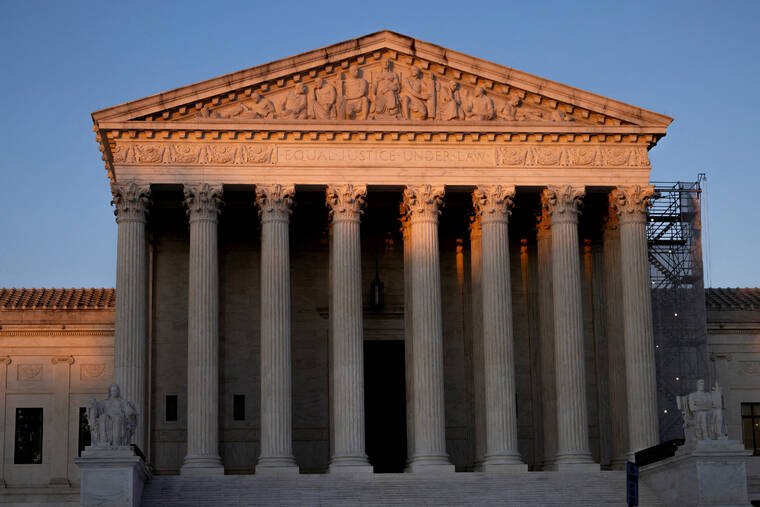
The U.S. Supreme Court is expected to issue rulings on Friday as it weighs cases with major implications both nationally and around the world including the legality of President Donald Trump’s sweeping global tariffs.
The court indicated on its website on Tuesday that it could release decisions in argued cases when the justices take the bench during a scheduled sitting on Friday. The court does not announce ahead of time which rulings it intends to issue.
ADVERTISING
The challenge to Trump’s tariffs is among the most closely watched of the cases awaiting decisions by the top U.S. judicial body that could impact the global economy and marks a major test of presidential powers. During arguments heard by the court on November 5, conservative and liberal justices appeared to cast doubt on the legality of the tariffs, which Trump imposed by invoking a 1977 law meant for use during national emergencies. The case involves appeals by Trump’s administration after lower courts ruled that his unprecedented use of that law exceeded his authority.
The Republican president has continued to express concern about the possibility of losing the case. In a social media post on Friday, Trump said such a ruling would be a “terrible blow” to the United States.
“Because of Tariffs, our Country is financially, AND FROM A NATIONAL SECURITY STANDPOINT, FAR STRONGER AND MORE RESPECTED THAN EVER BEFORE,” Trump said in another post on Monday.
Trump invoked the International Emergency Economic Powers Act on goods imported from individual countries to address what he called a national emergency related to U.S. trade deficits, as well as on China, Canada and Mexico as economic leverage to curb the trafficking of the often-abused painkiller fentanyl and illicit drugs into the United States.
Other important cases are also awaiting rulings at the court, which has a 6-3 conservative majority. In October, the court heard arguments in a challenge to another key section of the Voting Rights Act, the landmark 1965 federal law enacted by Congress to prevent racial discrimination in voting.