SpaceX launches another Starship rocket to test reusable design
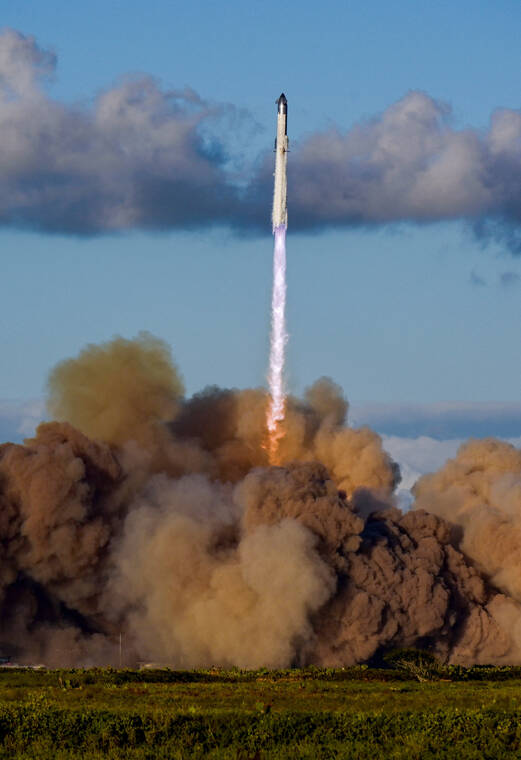
WASHINGTON — Elon Musk’s SpaceX launched its 11th Starship rocket from Starbase, Texas on Monday, a test mission to demonstrate the giant vehicle’s reusable design for lofting satellites and eventually taking humans to the moon and Mars.
Starship, consisting of the Starship upper stage stacked atop its Super Heavy booster, launched at around 6:20 p.m. CT from SpaceX’s Starbase facilities. After sending the Starship stage to space, Super Heavy returned for a soft water landing in the Gulf of Mexico, roughly 10 minutes after liftoff.
ADVERTISING
Its last mission, in August, ended a streak of testing failures earlier this year as SpaceX pushed to stress-test features for its total reusability. SpaceX, after Monday’s flight, is hoping to start launching a more advanced Starship prototype equipped with features tailored for moon and Mars missions.
“We’ve done everything we can think of to make that next test flight, Flight 11, successful,” SpaceX President Gwynne Shotwell said at a conference in Paris last month. “But, you know, you never know when you’re going to get punched in the face, so we’ll see.”
SpaceX during the mission deployed its second cluster of dummy Starlink satellites in space, and is aiming to see the ship reach the Indian Ocean after blazing back through Earth’s atmosphere, where a variety of experimental heat shield tiles on Starship’s exterior will face super-hot plasma.
Starship is scheduled to land NASA astronauts on the moon by 2027. The rocket, many times larger than SpaceX’s workhorse Falcon 9, is also key for launching heavier Starlink satellites essential to the company’s lucrative mobile broadband goals. It is the centerpiece of Musk’s vision to send humans and cargo to Mars.
A lengthy to-do list remains for Starship’s future service as an astronaut moon lander for NASA as part of a more than $3 billion contract awarded in 2021.