
Netanyahu says Israel and Hamas are on the brink of a hostage deal
JERUSALEM — A day after Hamas signaled a willingness to release Israeli hostages as part of President Donald Trump’s ceasefire proposal, Prime Minister Benjamin Netanyahu of Israel said Saturday that he, too, hoped to finalize a deal.
In a six-minute nighttime speech, he said that Israel was “on the brink of a great achievement” that could lead to the release of the remaining hostages in the Gaza Strip.
ADVERTISING
There were other positive signs. The Israeli government said Saturday that it was preparing for the “immediate implementation” of the first steps of Trump’s proposal. Hours earlier, Hamas said in a statement that it was willing to release all of its remaining hostages in exchange for prisoners in Israel, a key part of the plan.
But reaching an agreement to fully carry out Trump’s ambitious proposal — which would compel Hamas to disarm and relinquish any role in the postwar government of Gaza — remains a serious challenge.
Trump exuded confidence Friday that a deal was imminent, saying it was a “big day,” while exhorting Israel to stop bombing Gaza. But he conceded that negotiators still needed “to get the final word down in concrete.”
Hamas’ statement did not say whether it would accept many of the conditions in Trump’s plan, including laying down its weapons. And it was unclear if Israel was willing to negotiate major changes to the plan’s postwar vision for Gaza, which Netanyahu said he supported during a visit to the White House last week.
In his speech, in which he repeatedly rebuked those who have demanded an end to the conflict in hopes of a hostage release, Netanyahu insisted that Hamas was only willing to free the hostages now because of the military and political pressure that he and Trump had applied.
“I withstood immense pressure from home and abroad to end the war,” he boasted.
Negotiations were getting back on track Saturday. The Egyptian Foreign Ministry announced that it planned to host delegations from Israel and Hamas on Monday for indirect talks.
Steve Witkoff, Trump’s Middle East envoy who was involved in drafting the ceasefire plan, was expected to head to the region soon.
And mediators from Qatar and Egypt were holding their own talks with Hamas about the proposal, while the United States was speaking with Israel, according to two diplomats with knowledge of the contacts. They spoke anonymously to candidly discuss the sensitive subject.
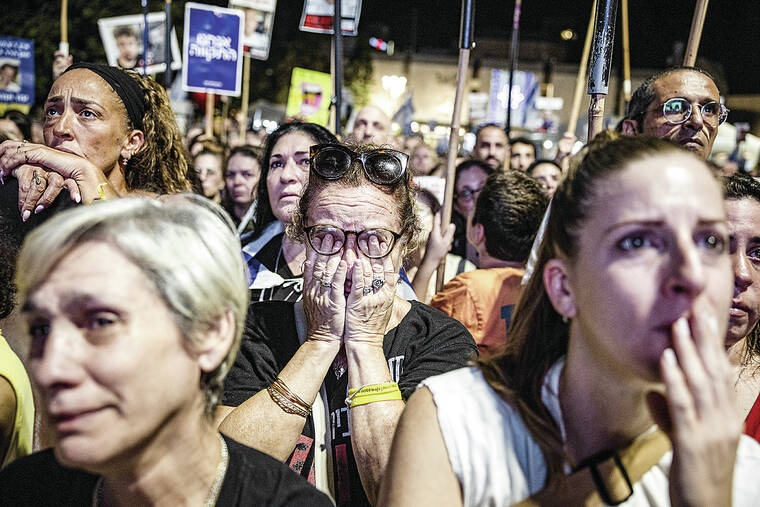
Israelis and Palestinians were caught between disbelief, tentative hope and utter confusion after the developments, which many hoped could bring an end to the nearly two-year war.
Following Trump’s demand for Israel to stop bombing, Israeli forces were instructed to shift to a defensive posture, though they generally remained in their positions, said three Israeli officials, who spoke anonymously because they were not authorized to speak publicly.
On Saturday, Trump wrote in a post on social media that “Hamas must move quickly, or else all bets will be off.” He added that he would “not tolerate delay, which many think will happen, or any outcome where Gaza poses a threat again.”
But it was unclear what that meant for Palestinians in Gaza, where around 66 people were reported killed Friday, local health officials said.
That toll does not distinguish between civilians and combatants.
© 2025 The New York Times Company


