Powell stresses ‘challenging situation’ for Fed as rate debate intensifies
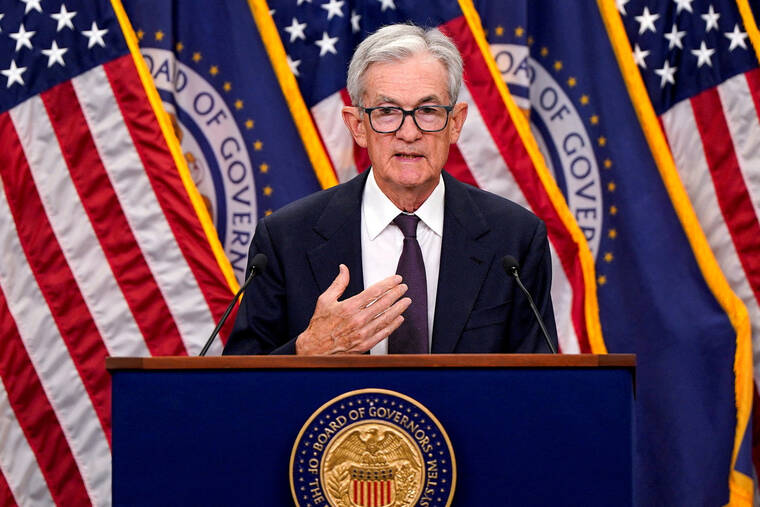
Jerome Powell, the chair of the Federal Reserve, on Tuesday underscored the “challenging situation” confronting the central bank as it contended with higher inflation and a weaker labor market, even as he signaled his support for further interest rate reductions.
“Near-term risks to inflation are tilted to the upside and risks to employment to the downside,” Powell said in a speech at an event in Rhode Island. “Two-sided risks mean that there is no risk-free path.”
ADVERTISING
“If we ease too aggressively, we could leave the inflation job unfinished and need to reverse course later to fully restore 2% inflation,” he added. “If we maintain restrictive policy too long, the labor market could soften unnecessarily.”
The Fed chair’s comments come on the heels of the central bank’s decision last week to lower interest rates for the first time this year to a new range of 4% to 4.25%. At the time, Powell called it a “risk management” move to protect the labor market.
During a moderated discussion after his remarks, Powell said it was no longer accurate to say that the labor market was “solid” and added that the central bank was seeing “meaningful weakness in the labor market.”
“You’re in a low-fire, low-hire economy,” the Fed chair added. “We’re having very important changes to economic policy in the United States, and companies and people are wondering, How’s that going to work out?”
Even after the latest reduction in interest rates, Powell on Tuesday described the Fed’s policy settings as “modestly restrictive” and “well positioned to respond to potential economic developments.” That suggests that Powell sees further scope to lower interest rates this year.
Projections released alongside last week’s decision showed most Fed officials expected interest rates to decline another half a percentage point this year to a range of 3.5% to 3.75%. But there is a range of views among the Fed’s 19 policymakers about the path forward for interest rates — differences that stem from varying opinions on the health of the economy and the extent of the inflation threat posed by President Donald Trump’s new tariffs.
While the unemployment rate remains relatively low, at 4.3%, monthly jobs growth has slowed sharply, and there are other signs that companies are pulling back on hiring. Consumer prices have also started rising again, pushing inflation further from the Fed’s 2% target.
Against this backdrop, six policymakers penciled in no more cuts this year in the latest projections. One official submitted what is known as a “soft dissent” by writing down a forecast for interest rates to stay at the previous level of 4.25% to 4.5%. Two others predicted only one more quarter-point reduction.
© 2025 The New York Times Company