After years of anger directed at CDC, shooting manifests worst fears
The day after a lone gunman opened fire on the Centers for Disease Control and Prevention in Atlanta, killing a police officer and shattering windows across the agency’s campus, employees were reeling from shock, fear and rage.
“We’re mad this has happened,” Dr. Debra Houry, the CDC’s chief medical officer, said in a large group call Saturday morning with Susan Monarez, the agency’s newly confirmed director, who tried to reassure them. Another employee on the call, a recording of which was obtained by The New York Times, asked Monarez: “Are you able to speak to the misinformation, the disinformation that caused this issue? And what your plan forward is to ensure this doesn’t happen again?”
ADVERTISING
The investigation into the shooting and the gunman’s potential motives was still in early stages Saturday. But law enforcement officials said that the suspect identified in the shooting had become fixated with the coronavirus vaccine, believing that it was the cause of his physical ailments.
Inside the CDC, the shooting was viewed as part of a pattern in which health workers have been targets of political, verbal and physical assaults on them and their workplaces.
Dr. Demetre Daskalakis, the director of the CDC’s respiratory diseases division, told Monarez on the call that employees wanted to see a plan for their safety and an acknowledgment that the attack was not just “a shooting that just happened across the street with some stray bullets.”
Daskalakis was not in his office when its windows were pierced by one of the gunman’s bullets.
Many Americans, and even some top federal health officials in the Trump administration, have blamed the CDC for lockdowns, school closings and vaccine mandates, even when some of those decisions were made by state and local governments, or businesses.
The Times spoke with or texted a dozen CDC scientists Saturday, who discussed the shooting on the condition of anonymity for fear of retaliation. They described being terrified as bullets shattered the glass windows, and some recounted the chilling sight of casings littered in front of the CDC.
In interviews, the employees conveyed sadness about the police officer who had died trying to keep them safe, and a feeling of betrayal and devastation at being demonized while working to improve Americans’ health.
The sound of rapid gunfire started around 4:50 p.m. Friday. One scientist who evaluates COVID vaccines had just stepped out of her building to walk to her car. As she headed to pick up her infant daughter from day care, she heard shots over her right shoulder, she said. She turned around, ran back inside and called security to confirm what was happening.
“CDC SHELTER IN PLACE. GUNMAN AT EMORY POINT,” she wrote to friends and colleagues in a group chat at 4:57 p.m. (The agency sent its alert to employees at 5:13 p.m.)
The employee and three others barricaded themselves in an office, moving two loaded bookshelves against the door. She put a sticky note over the motion sensor for the light switch and laid flat on the floor for hours, before a SWAT team arrived to clear the floor.
At least four buildings were damaged by bullets, Monarez said in a statement Friday night. Photos shared by workers revealed glass windows shattered by bullet holes. One showed as many as 18 bullet holes in a single building.
One of the buildings included a containment lab of the highest biosecurity level, but under tight security and with reinforced walls. It was not hit in the attack. The CDC studies some of the most dangerous pathogens in the world, including Ebola and Marburg viruses and the bacteria that cause anthrax.
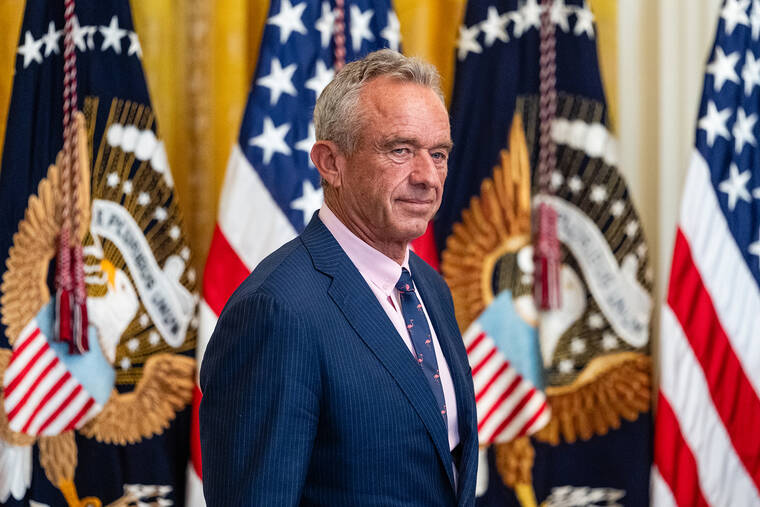
Health Secretary Robert F. Kennedy Jr., who oversees the CDC, did not make a statement Friday. Late Saturday morning, more than 30 minutes after posting photos of himself fishing on social media, Kennedy posted condolences on his official X account and pledged to support CDC employees.
Kennedy has previously called the CDC a “cesspool of corruption” and a fascist enterprise. He has accused the agency’s scientists of ignoring vaccine harms to children, comparing it to the Catholic Church’s cover-up of child sex abuse. He has also disparaged the COVID-19 vaccine, calling it the “deadliest” vaccine ever made.
© 2025 The New York Times Company