Trump administration acknowledges lack of evidence from Epstein documents
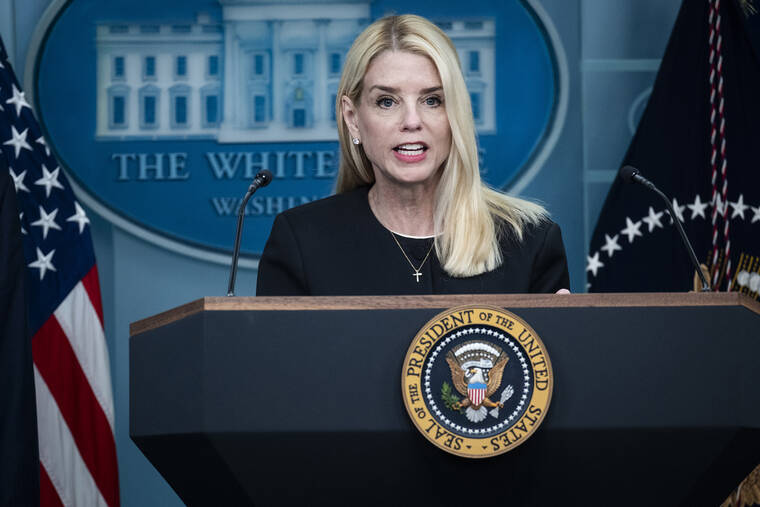
WASHINGTON — For months, Attorney General Pam Bondi promised the release of documents on disgraced financier Jeffrey Epstein that could reveal damaging details, drumming up anticipation over the files, long a source of speculation and conspiracy theories.
But on Monday, a memo by the Justice Department undercut her own statements, pouring cold water on baseless claims. It amounted to a catalog of conclusions that affirmed those reached years earlier by investigators, including that Epstein killed himself while in a Manhattan cell awaiting trial.
ADVERTISING
“This systematic review revealed no incriminating ‘client list,’” the memo said. “There was also no credible evidence found that Epstein blackmailed prominent individuals as part of his actions. We did not uncover evidence that could predicate an investigation against uncharged third parties.”
“No further disclosure would be appropriate or warranted,” the memo continued, adding that the work of the Justice Department and the FBI on the records had been thorough.
In the six years since his death in 2019, the case of Epstein has become a public obsession for a segment of Donald Trump supporters, some of whom have accused two of his most senior advisers, Bondi and FBI Director Kash Patel, of slow-walking the review and release of the case file.
A release of related documents in February, which Bondi had similarly hyped, fell flat, drawing widespread derision as much of the information was already in the public domain.
While many had been awaiting what Bondi declared would be “Phase 2” of the release of the so-called Epstein files, the new memo sought to end any such expectations. It included an hourslong video, whose existence was previously disclosed, of the hallway outside Epstein’s jail cell.
The video released by Bondi and Patel, however, appears to be missing a minute just before midnight. The digital clock on the screen jumps from 11:58:58 p.m. to 12:00 a.m. Officials did not immediately have an explanation for the apparent gap.
© 2025 The New York Times Company