
Hawaii delegation disagrees with Trump’s decision
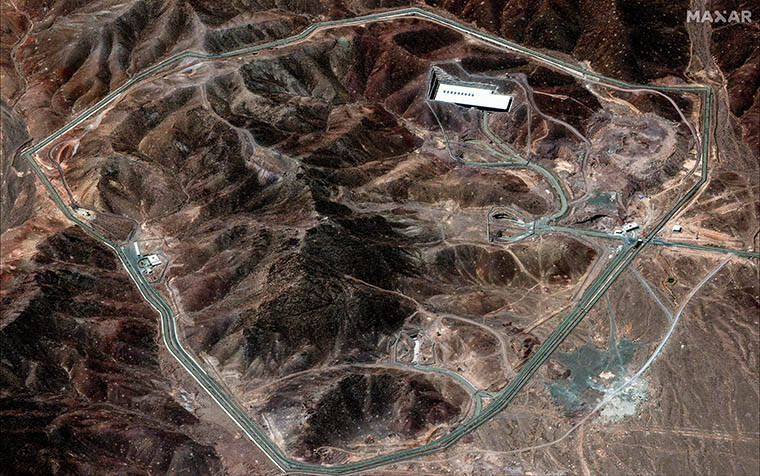
Hawaii’s Democratic congressional delegation was largely critical of President Donald Trump’s decision to attack three nuclear sites in Iran Saturday, expressing concern it will ignite further conflict in the region and put American lives at risk.
During a televised Oval Office address after the bombings, Trump said Iran’s key nuclear enrichment facilities had been “completely and totally obliterated,” and that “Iran, the bully of the Mideast, must now make peace.”
ADVERTISING
He added that if not, the U.S. would go after other targets “with precision, speed and skill.”
Rep. Jill Tokuda and Sen. Brian Schatz said they are worried the U.S. attack will lead to an escalation of the Israel-Iran conflict rather than bring peace, endangering American lives.
“First and foremost, my prayers and my thoughts are with over 40,000 service members we have in the Middle East and the region,” Tokuda said in a phone interview Saturday. “Americans that are there, we need to pray for their safety because the president’s unilateral, unconstitutional, unauthorized actions have basically put them in significant harm’s way.
“That’s where my heart and my head go to first, that we need to make sure our people are safe as a result of this president’s singular actions.”
Tokuda said there was no advance notice of the bombing from the Trump administration, and that when she woke up Saturday morning to learn that B-2 bombers were heading to Guam, she was deeply concerned.
“We’ve put American lives at risk,” Tokuda said. “We have completely trampled over the Constitution …”
She also called attention to Trump’s “erratic actions — one day telling people to leave Tehran and creating fear there, then saying, ‘Well, I’ll make my decision in two weeks,’ completely disagreeing with his own cabinet — ” and the president’s “diplomacy by social media posting,” which are creating “a chaotic and dangerous environment for Americans, and, quite frankly, the world.”
Schatz in a statement Saturday called the strike ordered by Trump “a reckless and dangerous escalation that puts American lives at risk and threatens our national security.”
“It was carried out without congressional approval and with no clear plan for what comes next beyond more chaos and bloodshed,” said Schatz, a member of the Senate Foreign Relations Committee. “We’ve all seen what happens when the United States gets dragged into an endless war in the Middle East — lives lost, trillions spent, and no lasting peace or security. We cannot continue to repeat the mistakes of the past.”
U.S. Rep. Ed Case also was critical of Trump’s authorization of the bombing attack.
“Iran under its current leadership has chosen to be our enemy and cannot possess nuclear weapons under any circumstances, but that end doesn’t justify any means,” Case said in a statement. “The administration has not provided the information required to determine whether this attack was appropriate, including whether diplomatic efforts were exhausted, whether there was a risk of imminent attack on our country, and whether the administration consulted in any way with Congress as required by the Constitution and law.”
Both Tokuda and Case said they are returning to Washington, D.C. Case said he expects a full classified briefing addressing all of these issues.
U.S. Sen. Mazie Hirono did not immediately respond to a request for comment. But earlier, as the conflict between Israel and Iran intensified, she told the Star-Advertiser that only Congress can declare war, not the president.
She also blamed Trump for the ongoing missile exchanges between the two countries, noting his rejection of an Obama administration deal with Iran in 2015 that restricted Iran’s nuclear program in exchange for relief from sanctions.
In a post on X before Saturday’s U.S. attack on Iran, Schatz said, “It is on President Trump to avert a regional catastrophe.”
He also said in his post that it is not in U.S. national security interests “to militarily attack Iran. The best way to ensure regional stability and protect American lives is to reach a negotiated agreement.”


Get the Latest News
