Even though hurricane season officially started June first, the first month is generally quiet and this year is forecasted to have relatively few storms in the Central Pacific. However, it only takes one storm hit to create a big mess.
The old adage — June, too soon; July, stand by; August, come they must; September, remember; October, all over — is no longer accurate. Because of global warming, the hurricane season has been extended through the month of November.
This year, forecasters are expecting a very active Atlantic storm season. On the other hand, we have been very fortunate in Hawaii to be free of storms in recent years. This is not so for the southern United States. Floods and tornadoes have already devastated large areas.
What we have learned from previous storms is that the major damage done from actual winds was to trees like lychee, macadamia and other broad-leaved trees. However, palms like coconut, royal, cabbage palms, Mexican fan palms, our native pritchardia species, and scores of others survived the storm winds. Many will tolerate flooding with little damage as well. If the soil was so soggy that the palms tipped over, they were easy to replant and recover.
Since there are hundreds of species, the question is which palms can be used to create your tropical landscape with a minimum of storm damage and care? The Hawaii Island Palm Society is available to help folks answer that question so check out their website.
When it comes to trees other than palms, remember they are important elements of parks, streets and home gardens. Do not forget that they supply oxygen, sequester carbon and in general are helping to minimize the negative effects of global climate change. However, they do require proper maintenance to ensure they make it through stormy weather.
It is always important to inspect your trees for dead branches that seem to be ready to fall. A gust of wind can snap an arm-size branch from a tree and send it at missile speed through a picture window. A low-hanging branch over a roof can wreak havoc. Powerful winds can turn the limb into a tool of destruction. This tool can remove shingles as easily as a chef can descale a fish. Removing dead and out of place limbs is a good idea even if there is no storm.
Fan-like fungus growing on the side of a tree trunk indicates rotten spots that need attention. A hole made by poor pruning, damage from earlier storms, or the gouge of an auto bumper can start rotten spots.
Remove decayed trees that are too weak to hold up under the strain of a storm. This action will save you grief later.
Actually, even a 100-mph wind is not as dangerous as it sounds if necessary measures are taken before the wind reaches gale force.
If your home is located in an area that might be flooded, you’ll be given ample notice to evacuate hours before the storm reaches your area. Otherwise, there is no safer place than in a well built home.
Soon as the storm has passed, it is a good idea to inspect the trees and other plants around the house. Usually, all the plants will show signs of wind damage. With a little trimming, propping, resettling of root systems, fertilizing and watering, nearly all plants that were shaken loose from the ground can be salvaged.
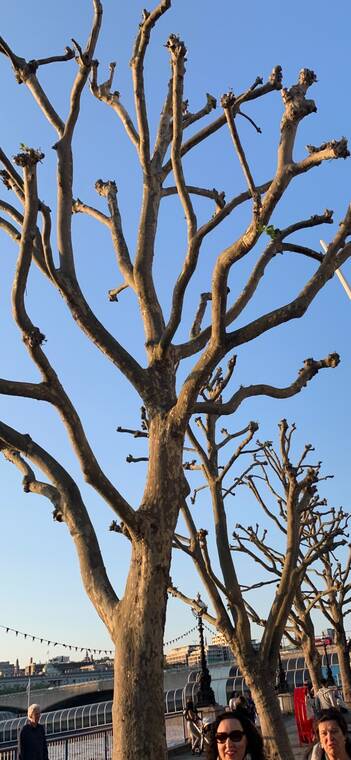
After hurricane season, it is a good idea to consider root-pruning as a way to manage those larger trees. If in doubt on what to do, you may contact a local certified arborist to assess the situation and correct it.
Many of our tropical trees grow rampant with extensive root systems. That is why we prune to keep them from getting out of hand, but let us prune the right way. Late spring and summer are not the best time for heavy pruning since shade is at a premium during those hot days ahead. Late fall is a good time as the days are getting shorter and the sun’s rays less intense.
In conclusion, remember that trees are vital to making urban life healthier for us physically, mentally and even spiritually. Forest fires, storms and drought are destroying our forests on a global scale. On the other hand, every time we plant a tree, we help to minimize the effects of global warming.
Enjoy those beautiful trees in your garden by maintaining them correctly. On a grander scale, work with Hawaii County and state government to plant more trees in parks, roads and highways.
We depend on the tourist industry. Visitors to our islands, as well as residents, appreciate our beautiful landscapes. Without trees, this would just be another barren desert island. Palms, because of their beauty and tenacity, make a great choice.
For more information on tree selection and care, call the University of Hawaii Master Gardener help line. In West Hawaii call (808) 322-4893 and East Hawaii call (808) 981-5199. The are also several books on tree care and you may also do a search for information on your smart phone.
Norman Bezona is professor emeritus, University of Hawaii College of Tropical Agriculture and Human Resources.