As small businesses raise prices, some customers push back
NEW YORK — Inflation isn’t only costing small businesses money. It’s costing them customers as well.
At the Bushwick Grind Cafe in Brooklyn, New York, Kymme Williams-Davis has raised prices and switched to different types of goods to keep up with the rising costs of milk, coffee, paper goods and plastic, as well as shortages of items such as paper cups and plastic lids. She hasn’t experienced anything like this since opening in 2015.
ADVERTISING
Williams-Davis says she has lost nearly half of her regular customers. Some have traded down and are buying coffee for $1 at the McDonald’s or bodega on either side of the café instead of paying the $3 she charges.
“If (customers) can get it for a dollar for not that notable of a difference, they’re going next door.”
One customer who had been coming in for years stopped in to tell Williams-Davis he bought himself a coffeemaker.
“He said I’m going to start making coffee at home, I need to budget, so I won’t be coming in here every day,” she said. “I feel like I’ve been on a goodbye campaign.”
Inflation has been rising at nearly the fastest pace in 40 years, driven up by strong consumer spending and higher costs for food, rent, medical care, and other necessities.
On Tuesday, the government is expected to report that price increases slowed in August compared with a year ago, largely because of a steady drop in the cost of gas. Prices for other items, particularly food, are likely to keep rising quickly. Overall, economists forecast consumer prices rose 8.1% in August, compared with a year ago, down from 8.5% in July, according to data provider FactSet.
For much of the pandemic, small business customers were largely tolerant of price increases and kept on spending. But now owners say they’re seeing some pushback.
Ninety-seven percent of small business owners say inflationary pressure is the same or worse than it was three months ago, according to a survey of more than 1,500 small businesses by Goldman Sachs 10,000 Small Business Voices. Sixty-five percent have raised prices to offset higher costs. And 38% say they’ve seen a decline in customer demand due to price increases.
The pullback is more dramatic among consumers with less discretionary income. Walmart says its customers, who tend to have lower incomes, are spending more on food and less on other items. Small business owners are seeing much of the same.
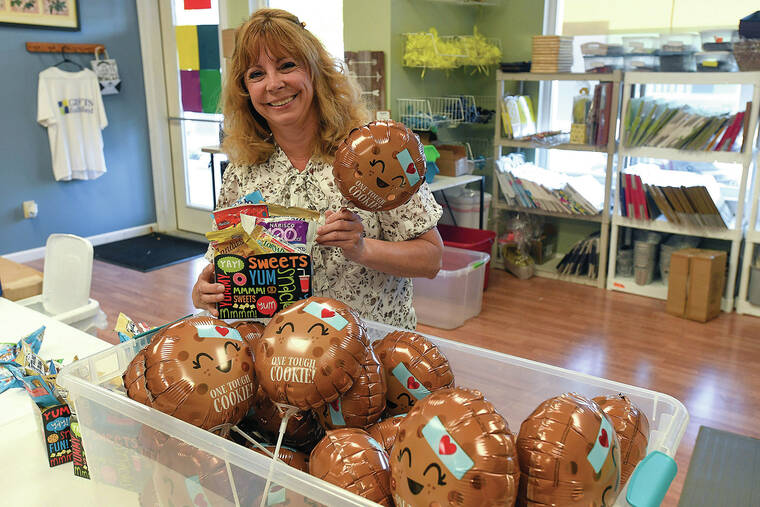
Kim Shanahan operates the online store Gifts Fulfilled in Berlin, Maryland, which sells gift baskets and care packages and employs people with disabilities.
“Last year has been challenging to say the least,” she said. “All prices across the board have gone up.” Everything from cardboard, containers and the food that she includes in the baskets have become more expensive.
She implemented a 5% increase to cover some costs. After she raised the price of her most popular get-well gift basket called “One Tough Cookie,” from $27.50 to $28.95, sales went down, she said.
Less expensive baskets, such as those with gifts and candy that sell for $25 and under, have been the most affected, with unit sales down about 50% in 2022 compared with last year. “The whole segment of the market is gone for us,” she said.
“We are a ‘want to-’ not ‘have to-’ have item in our primary categories,” Shanahan said. “What we sort of see is people maybe buying a $50 gift dropping down to $35. And the whole lower tier aren’t even buying at all, they don’t have the discretionary funds.”