Finland, Sweden offer NATO an edge as rivalry warms up north
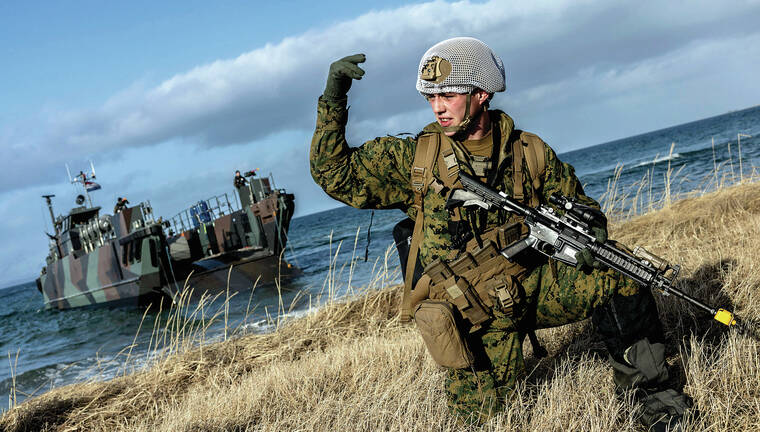
WASHINGTON — The first surprise, for the Finnish conscripts and officers taking part in a NATO-hosted military exercise in the Arctic this spring: the sudden roar of a U.S. Marine helicopter assault force, touching down in a field right next to the Finns’ well-hidden command post.
The second surprise: Spilling out of their field headquarters, the Finnish Signal Corps communications workers and others inside routed the U.S. Marines — the Finns’ designated adversary in the NATO exercise and members of America’s professional and premier expeditionary force — in the mock firefight that followed.
ADVERTISING
Finnish camouflage for the Arctic snow, scrub and scree likely had kept the Americans from even realizing the command post was there when they landed, Finnish commander Lt. Col. Mikko Kuoka suspected. “For those who years from now will doubt it,” Kuoka wrote in an infantry-focused blog recording the outcome.
As the exercise made clear, NATO’s addition of Finland and Sweden — what President Joe Biden calls “our allies of the high north” — would bring military and territorial advantages to the Western defense alliance. That’s especially so as the rapid melting of the Arctic from climate change awakens strategic rivalries at the top of the world.
In contrast to the NATO expansion of former Soviet states that needed big boosts in the decades after the Cold War, the alliance would be bringing in two sophisticated militaries and, in Finland’s case, a country with a remarkable tradition of national defense. Both Finland and Sweden are in a region on one of Europe’s front lines and meeting places with Russia.
Russian President Vladimir Putin’s invasion of Ukraine in late February, along with his pointed reminder about the Kremlin’s nuclear arsenal, have galvanized current NATO nations into strengthening their collective defenses and bringing on board new members.
A NATO that includes Finland and Sweden would come as an ultimate rebuke for Putin’s war, empowering the defensive alliance in a strategically important region, surrounding Russia in the Baltic Sea and Arctic Ocean, and crowding NATO up against Russia’s western border.
“I spent four years, my term, trying to persuade Sweden and Finland to join NATO,” former NATO secretary-general Lord George Robertson said this summer. “Vladimir Putin managed it in four weeks.”